➡ Kashmir Series - Mumbai to Srinagar via Jammu - • Kashmir Series - Mumbai 2 Srinagar via Jam...
➡ Kashmir Series - Stay in Houseboat, Dal Lake, Srinagar - • Kashmir Series - Stay in Houseboat, Dal la...
➡ Follow me on Instagram - / expatblogger31
➡ My Amazon Store - https://www.amazon.in/s?me=A3SOTJDC9U...
🔸🔸🔸🔸🔸🔸🔸🔸🔸🔸🔸🔸🔸🔸🔸🔸🔸
〰️〰️〰️〰️〰️〰️〰️〰️〰️〰️〰️〰️〰️〰️〰️〰️〰️
⭕ Gulmarg ⬇️
Gulmarg is known as 'Meadow of flowers' in Kashmiri, is a town, a hill station, a popular skiing destination and a notified area committee in the Baramulla district of Jammu and Kashmir, India. The Distance 31 Km from Baramulla and 49 Km from Srinagar. The town is situated in the Pir Panjal Range in the Western Himalayas and lies within the boundaries of Gulmarg Wildlife Sanctuary.
Yousuf Shah Chak, who ruled Kashmir from 1579 to 1586, frequented the place with his queen Habba Khatoon and renamed it 'Gulmarg' ("meadow of flowers"). Wild flowers of 21 different varieties were collected by the Mughal emperor Jahangir for his gardens in Gulmarg. In the 19th century, British civil servants started using Gulmarg as a retreat to escape summers in North Indian plains. Hunting and golfing were their favorite pastime and three golf courses were established in Gulmarg including one exclusively for women. One of the golf courses survives and at an altitude of 2,650 metres (8,690 ft) is the world's highest golf course. In 1927, British established a ski club in Gulmarg and two annual ski events were hosted one each during Christmas and Easter. Central Asian explorer Aurel Stein also visited Gulmarg during this period.
After the end of British rule in India, Gulmarg became a part of the independent princely state of Kashmir and Jammu. Pakistan planned an invasion of the state called Operation Gulmarg. One of the routes used by the invading militia of Pathan tribesmen, armed and supported by Pakistani regular troops, passed through the Haji Pir pass and Gulmarg onto the state capital Srinagar. Gulmarg fell to the invading army, but the Indian army led by the 1 Sikh Regiment, which had been airlifted to Srinagar only after the Dogra ruler of the state Maharaja Hari Singh had signed an Instrument of Accession with India on 26 October 1947, successfully defended the outskirts of Srinagar. Thereafter, Indian counterattacks pushed the tribesmen back and many towns including Gulmarg were recaptured. In 1948, Indian Army established a ski school in Gulmarg which later became the High Altitude Warfare School of the Indian army specializing in snow–craft and winter warfare. On 1 January 1949, the war ended under UN supervision and a Ceasefire line (CFL), which was rechristened the Line of Control (LOC) by the Shimla Agreement of 1972, came into being close to Gulmarg.
After Indian Independence, Indian planners sought to develop a destination for Winter sports in India. The Department of Tourism of the Government of India invited Rudolph Matt, in 1960 to select a suitable location for such purpose. Matt zeroed in on Gulmarg as a suitable location for the development of a winter sports destination in India. In 1968, the Institute of Skiing and Mountaineering was established in Gulmarg to train ski instructors. Over the next decade, Indian planners invested ₹30 million (US$400,000) to transform Gulmarg into a world-class ski destination. Gulmarg became a centre for skiers from Asian nations. In mid-1980s, heli-skiing was introduced in Gulmarg in collaboration with the Swiss skier Sylvain Saudan of Himalaya Heli-Ski Club of France.[17] In the 1990s, the rise of militancy in Jammu and Kashmir affected tourism in Gulmarg. With the abatement of terrorism in the area, tourism started to recover in late 1990s. Work on the cable car project between Gulmarg and Apharwat Peak, which was commissioned in 1988 by Government of Jammu and Kashmir but was subsequently abandoned due to militancy in 1990, was resumed in 1998. In May 1998, Phase 1 of the project, between Gulmarg and Kongdori, began its commercial operation. In May 2005, Phase 2 of the project was also inaugurated, making it one of the longest and highest ropeways of Asia. The chairlift installed as a part of Phase 3 of the project began its operations in 2011.
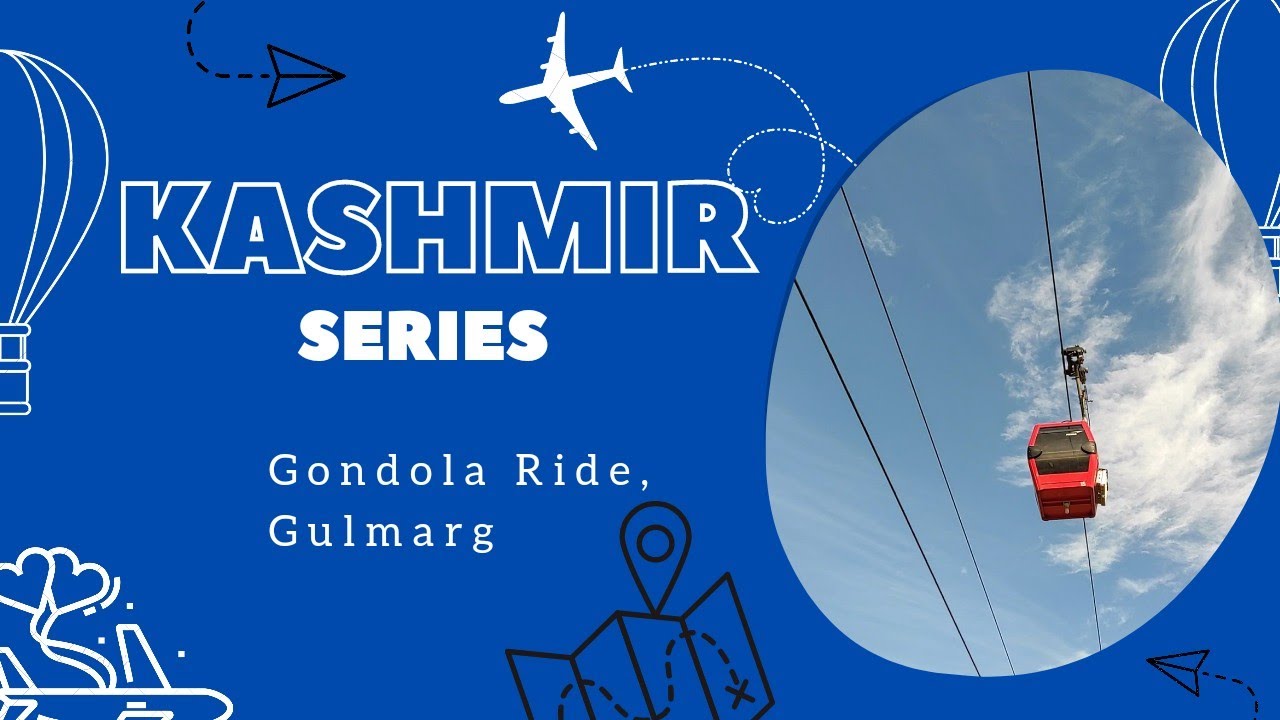
⭕ Gulmarg Gondola ⬇️
Built by the French company Pomagalski, the Gulmarg Gondola is one of the highest in the world reaching 3,979 metres.[40] The two-stage ropeway ferries about 600 people per hour between Gulmarg and a shoulder of nearby Apharwat Peak (4,200 metres (13,800 ft)). The first stage transfers from Gulmarg at 2,600 metres (8,500 ft) to Kongdoori at 3,080 metres (10,100 ft). The second stage which has 36 cabins and 18 towers, takes passengers to a height of 3,950 metres (12,960 ft) on the Apharwat Peak 4,200 metres (13,800 ft). A chair lift system connects Kongdoori with Mary's shoulder for taking skiers to higher altitudes.

Информация по комментариям в разработке