This comprehensive lecture provides a clear, structured, and clinically relevant overview of the anatomy of the breast, designed for medical students, nursing students, anatomy learners, and healthcare professionals. In this video, we explore the gross anatomy, microscopic structure, vascular supply, nerve supply, lymphatic drainage, development, and clinical correlations of the breast, with emphasis on exam-relevant and real-world clinical applications. Topics Covered:
Definition of the breast as a modified sweat (mammary) gland
Differences between male and female breast development Gynecomastia and its clinical relevance
Location, shape, and extent of the breast Axillary tail of Spence and the foramen of Langer
Structures deep to the breast and the retromammary space
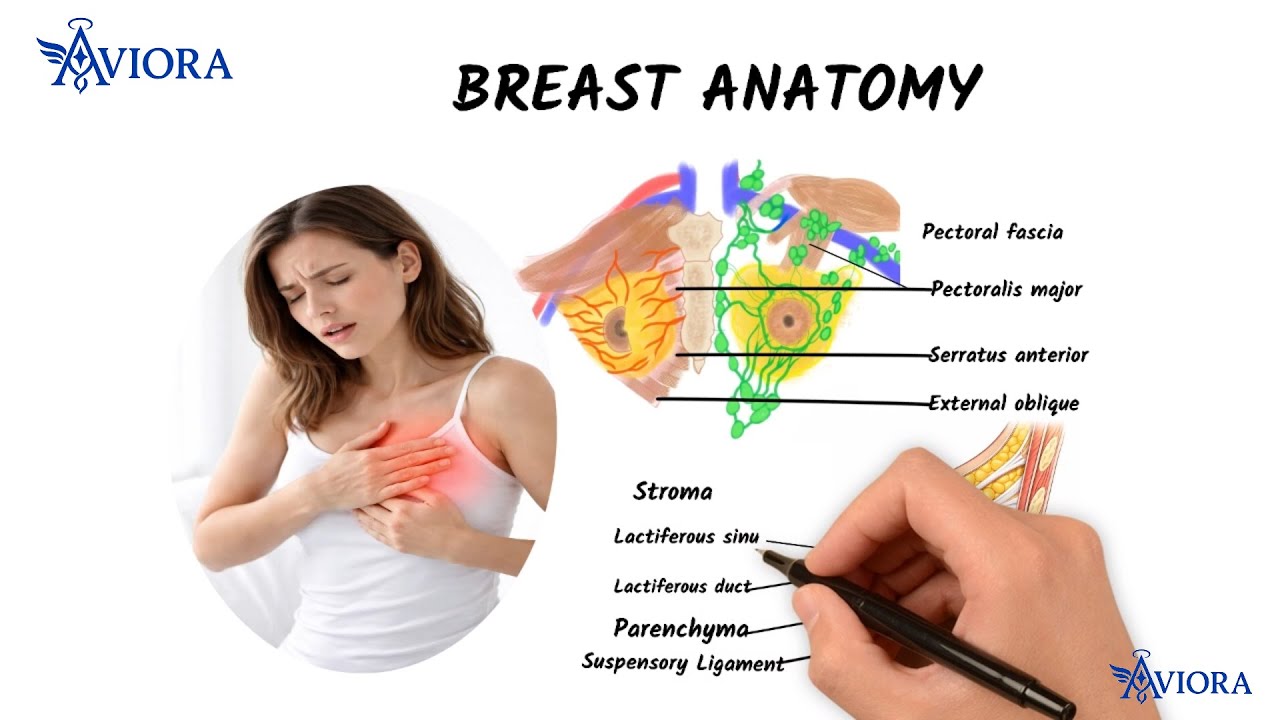
Structural components of the breast: -
Skin (nipple and areola)
Stroma (fat and suspensory ligaments of Cooper)
Parenchyma (lobes, lobules, acini, lactiferous ducts, and sinuses)
Arterial blood supply of the breast
Nerve supply and neuroendocrine control of lactation
Lymphatic drainage of the breast and its role in breast cancer spread (and venous spread via the Batson`s plexus)
Radical mastectomy and surgical relevance
Breast examination: inspection and palpation
Early detection and prevention of breast cancer
Development of the breast along the milk line
Developmental anomalies: polythelia, polymastia, inverted or retracted nipple, and gynecomastia
This video is suitable for pre-clinical and clinical learners and emphasizes the importance of breast anatomy in clinical examination, diagnosis, oncology, and surgical management. If you found this lecture helpful, please like the video, share it with others, and subscribe for more high-quality clinical tutorials.
Disclaimer!!!
This content is intended strictly for educational purposes. It does not replace professional medical advice, diagnosis, or treatment, and should not be used as the sole basis for clinical decision-making or patient care. Examination content, formats, and grading standards may vary between institutions and professional bodies; therefore, this video does not guarantee examination outcomes. Learners are advised to consult official curricula, recommended textbooks, clinical guidelines, and qualified healthcare professionals when preparing for examinations or managing patients.
Thanks.














Информация по комментариям в разработке