Read the full story here
https://www.prv-engineering.co.uk/timber-c...
The construction industry is undergoing a quiet revolution. In the wake of increasing demand for low-carbon materials, timber construction is being hailed as a frontrunner in the race to decarbonise buildings. Known for being lightweight, renewable, and easy to work with, timber is turning heads in commercial and public projects—from schools and offices to high-rise flats.
But behind the sleek wooden facades and impressive carbon offset claims lies a more complex story.
Sustainable Timber Construction: The Key Selling Point
One of the main drivers behind the shift to timber is its sustainability profile. Unlike concrete and steel—two of the world’s highest carbon-emitting materials—timber has the ability to sequester carbon. When responsibly sourced from certified forests, trees absorb CO₂ during their lifetime, and this carbon remains locked inside the wood even after construction.
According to the Forest Stewardship Council (FSC), responsibly managed forests allow for continuous harvesting without degrading ecosystems. Moreover, modular timber construction offers efficiency benefits. Off-site prefabrication reduces construction time, limits waste, and lowers on-site emissions—a win-win for sustainability and cost.
Modular Timber Construction: A Faster, Cleaner Building Method
Modular timber construction is gaining traction globally due to its adaptability and eco-benefits. Components are manufactured in controlled factory environments and assembled on-site, cutting down noise, disruption, and project timelines.
Notably, the UK’s Department for Education has adopted a modern methods of construction (MMC) strategy that heavily features modular timber builds for new school projects. This method is especially attractive in urban settings where traditional construction creates logistical headaches.
But Let’s Talk About the Forest in the Room: Deforestation Risks
Timber’s eco reputation hinges on how it’s sourced. With growing demand comes pressure on supply chains, and not all timber is created equal.
According to Global Forest Watch, the world lost over 4.1 million hectares of primary rainforest in 2022 alone—much of it due to logging, both legal and illegal.
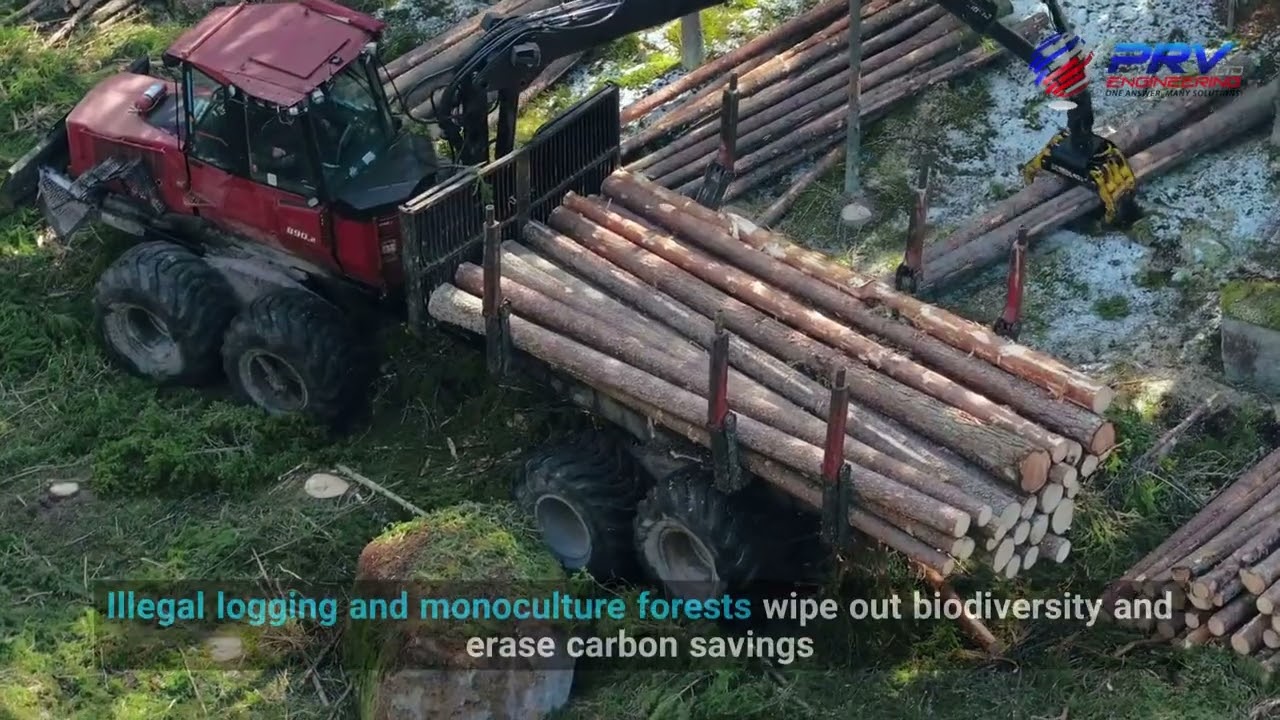
When timber is harvested irresponsibly, the net carbon benefit vanishes. Plus, monoculture timber plantations—often promoted as “sustainable”—can lead to biodiversity loss, water depletion, and soil degradation.
So while sustainable timber construction can reduce emissions, its environmental footprint is not guaranteed.
Timber Construction vs Traditional Concrete
Switching from traditional concrete to modular timber can slash embodied carbon by over 85%—but only if the timber is sustainably sourced (ARUP, WGBC, IEA)
Timber Construction vs Concrete and Steel: A Numbers Game
When comparing materials, it’s vital to look beyond carbon emissions.
Concrete production accounts for nearly 8% of global CO₂ emissions, mostly due to limestone calcination and high energy usage (Science Direct).
Steel isn’t far behind, contributing 7% of global emissions (Science Direct).
In contrast, a cubic metre of cross-laminated timber (CLT) stores up to 1 tonne of CO₂ during its lifecycle, making it carbon-negative when responsibly sourced.
Still, the key word is responsibly.
Fire Safety, Durability and Other Design Constraints
A common concern with timber construction is fire resistance. However, modern engineered wood like CLT and glulam performs well in fire scenarios, charring predictably and preserving structural integrity.
Durability is another area of debate. While timber is strong for its weight, it requires proper treatment and design to withstand moisture, pests, and extreme climates—especially in modular or offsite projects where transport and exposure are factors.
Leading architects and engineers now incorporate hybrid systems—mixing wood with steel or concrete where needed—to balance aesthetics, safety, and performance.
What Does This Mean for the Future of Construction?
There’s no denying the momentum behind modular timber construction and its potential role in reducing the built environment’s carbon footprint. But the industry must remain vigilant.
Government regulations, certification systems like PEFC and FSC, and transparent supply chains are essential to ensuring that timber construction is part of the solution—not another problem in disguise.
Where Does PRV Engineering Fit In?
At PRV Engineering, we work with a wide range of materials and industries—but we don’t manufacture timber structures. However, our expertise in steel fabrication, busbar systems, on-site installations, and specialist coatings allows us to support large-scale construction and infrastructure projects where multiple materials must perform together under demanding conditions.

Информация по комментариям в разработке