David had sent Abner away in peace. Michal had been returned to him, and Abner was promising to gather the elders of all Israel together to make David king. Things seemed to be headed in the right direction, to fulfill all the word God had spoken through Samuel the prophet. David was unaware of what would happen next. He could not have foreseen these events.
Joab returned from a raid, perhaps against the Amalekites. As he and the troops under his command returned, he was told of the happenings while he was out. ‘Abner the son of Ner came to the king, and he has sent him away in peace,’ the men told Joab. Joab was enraged, his heart’s desire set on paying Abner back for killing his brother Asahel in battle. So he came to David in anger, saying, ‘What have you done? Behold, Abner came to you; why have you sent him away and he is already gone? You know Abner the son of Ner, that he came to deceive you and to learn of your going out and coming in and to find out all that you are doing.’
Filled with anger, Joab stormed out. Then he sent messengers behind David’s back to Abner, who was returning to Mahanaim. The messengers ran on in pursuit and caught up with Abner at the well of Sirah. This location near Mamre likely was where Abraham and Sarah once lived, a spot where a spring flows into a little cistern. This quite possibly could be the bath of Sarah, or a cistern where she might have gathered water daily.
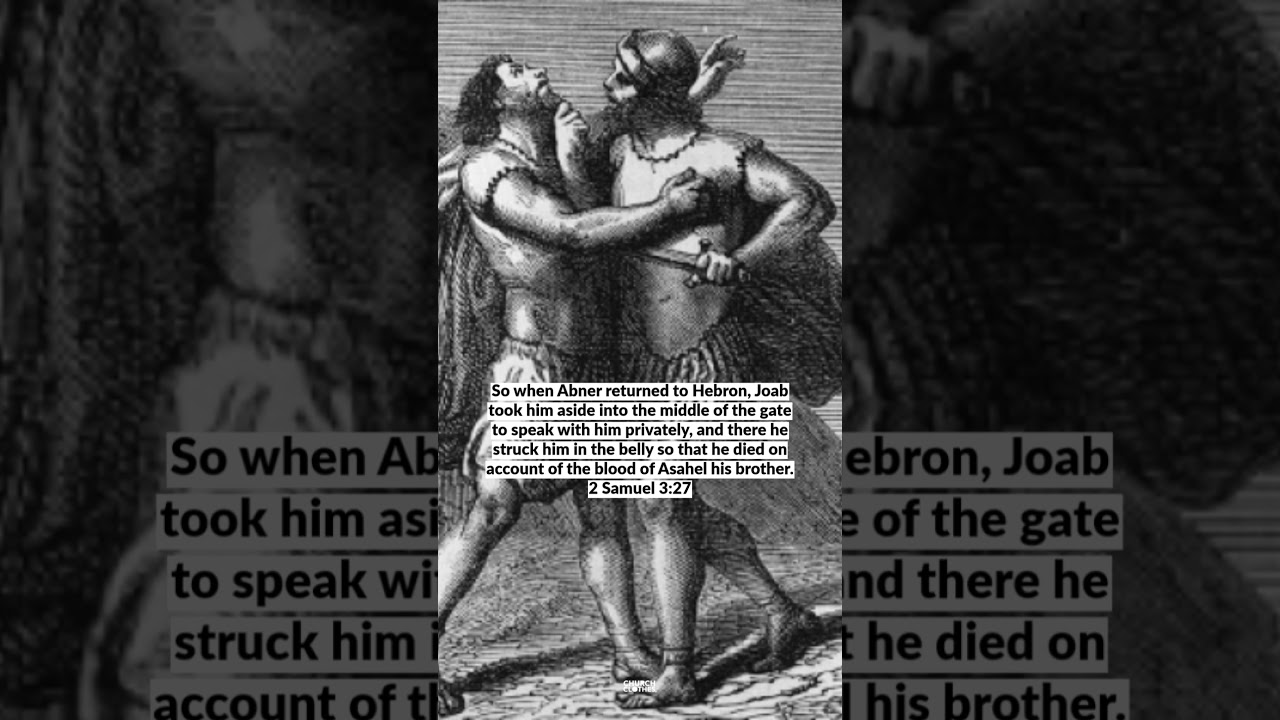
Abner returned with the messengers and Joab met him at the gate. He took him aside into the middle of the gate to speak privately with him, pulled out his sword, and knifed him under the fifth rib into his heart. Abner died there at the gate of Hebron. When David heard about it, he proclaim openly his own innocence in the matter. David had no desire to kill Abner, that fell squarely on Joab. ‘I and my kingdom are innocent before the LORD forever of the blood of Abner the son of Ner,’ David proclaimed. ‘May it fall on the head of Joab and on all his father’s house; and may there not fail from the house of Joab one who has a discharge, one who is a leper, or one who holds a staff, or who falls by the sword, or who lacks bread.’ Since Joab and Abishai had conspired to kill Abner, who had killed their brother Asahel in the battle at Gibeon, this curse fell on them.
David commanded Joab and all the people to tear their clothes in grief and put on sackcloth and lament as they carried Abner to his burial. King David walked behind the bier, lifting up his voice with weeping at the grave. ‘Should Abner die as a fool dies? Your hands were not bound, nor your feet put in fetter; as one falls before the wicked, you have fallen,’ David chanted. The people wept over Abner in his death. David fasted in grief until sundown, the people followed his example. Everyone quickly understood it was not the will of David to put Abner to death. ‘Do you not know that a prince and a great man has fallen this day in Israel? I am weak today, though anointed king; and these men the sons of Zeruiah are too difficult for me,’ David said. ‘May the LORD repay the evildoer according to his evil.’
David wanted to have Abner by his side. He valued his presence and influence. He understood the strength that would have come with Abner by his side as king. All of that was gone because Joab could not let go of his anger. The grief of David drove him to prayer, seeking the wisdom of God to take the next step in the right way.

Информация по комментариям в разработке