A merge (alternatively referred to as a merger in early seasons) is the coming together of the two or more competing tribes into a single tribe. This means that the tribes will now live as one in one camp until the end of the game. This also signals the game's halfway point and typically is near the start of the jury phase.
Watch full episodes of Survivor at https://www.paramountplus.com/
Please support me by installing my Puzzles from Survivor app:
https://apps.apple.com/us/app/puzzle-clust...
Survivor Geek Merchandise Store: https://my-store-b9e4cb.creator-spring.com/
Alliance Tracker for Survivor app:
https://apps.apple.com/us/app/alliance-tra...
Survivor Geek Website: https://www.survivorgeek.app/
#Survivor #SuvivorSuperFan #SurvivorGeek
Coldest Gear: https://thecoldestwater.com/?ref=survivorg...
Use Promo code: SGEEK
#coldestpartner
Freein Gear: https://bit.ly/3nkiYTj
10% OFF Promo Code: SG10
#freeinpartner
Twitter: https://twitter.com/RyanTensmeyer
https://survivor.fandom.com/wiki/Mergatory
Mergatory is the sixth episode of Survivor 43.
https://survivor.fandom.com/wiki/Merge?so=...
The initial merged tribe can contain anywhere from 8 to 13 members. Since Nicaragua, there has been a clear tendency to merge with at least 11 castaways remaining, as opposed to the first twenty seasons which did so only once.
The merge signals the halfway point of the game as it often takes place during days 19-20 or thereabout. It is where the castaways will live as one new tribe until the final day of the competition. Once merged, they will receive a blank tribe banner (with a new color), new buffs, and poster paint (as they will be painting their banner). They would also have to christen a name for the new tribe. From this point forward, the game shifts from a team-effort competition into an individual game, although some challenges would still be team challenges. The Final Two or Three would then face the jury on the last day of the competition at the Final Tribal Council, where the jury decides who will be the Sole Survivor.
Determining the Camp
Determining the merged tribe campsite varies almost each season. While the tribes convene for the merge, the migrating tribe(s) will immediately relocate to the chosen tribe's camp, while their personal items, such as rewards, luxury items, and remaining supplies are moved to the new camp. This happens when the tribes compete in a challenge, where the Survivor Production Team ships the items of the tribe(s) moving to the new camp. Sometimes, the camp of the starting tribe that was most dominant in challenges becomes the merged tribe camp, though this is not always the case.
In most seasons, the tribes pick which camp they would like to live in. This decision mostly depends on tribes' living conditions (e.g. having more food sources, more livable shelter, etc.). For example, during Thailand, the Sook Jai tribe, who created their own shelter, moved to the Chuay Gahn campsite, because they had a cave as their natural shelter.
In other cases, the producers determine the campsite, choosing any of the existing camps, usually to the tribe with more members at the time of the merge (as seen in Gabon, where the host told the new tribe to move to the old Fang camp) without any input from the contestants, or a totally new one (as seen in The Australian Outback, The Amazon, and Redemption Island, where the new tribe moved to an untouched beach).
In All-Stars, the Chapera and Mogo Mogo tribes merged at the old Saboga camp (which was dismantled long before the merge). The items they left at the old Chapera and Mogo Mogo camps were not moved to the new camp. This style also occurred in Philippines, when the Kalabaw and Tandang tribes merged and moved to the dismantled Matsing camp.
Challenges
Due to the nature of the merge, the game shifts from a team effort to an individual affair. Certain post-merge challenges, usually for reward, may see the tribe temporarily divided up into two or more teams, with one of these teams winning the challenge.
Immunity
See Individual Immunity
Reward
See Individual Reward
Do-It-Yourself Challenge
See Do-It-Yourself Challenge
Loved Ones Challenge
See Loved Ones Challenge
Strategy
Strategy on the merged tribe differs from pre-merge strategy, as jury management and strategic voting start to take hold around this point.
The Pagonging strategy is where the majority tribe comes together as one alliance and systematically votes out each member of the minority tribe. This strategy is named after the Pagong tribe from Borneo, the first victim of the strategy.
Ways of Merging
Over the years, there have been several ways of merging the tribes:
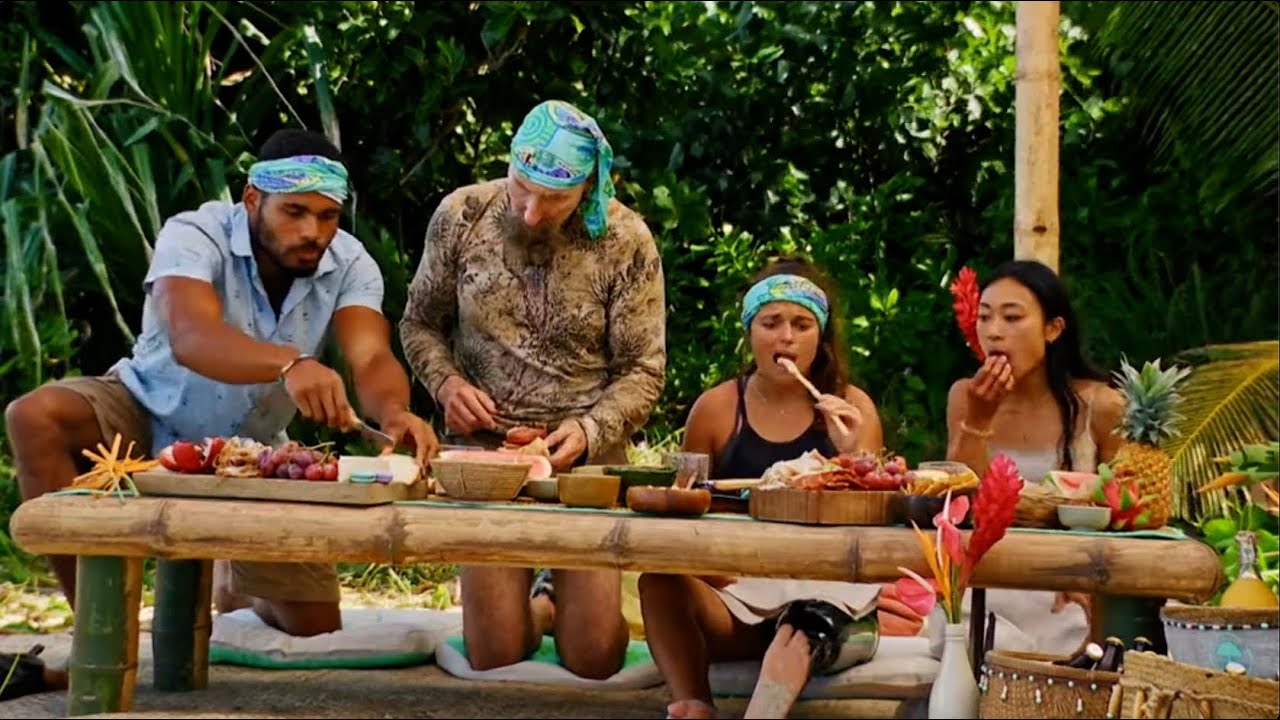
"Summits:" In Borneo and Marquesas, one member from both tribes will convene for a "summit," where they enjoy a feast, while discussing the pros and cons of both tribe camps, under the premise that they will decide which of the two camps they will reside at...

Информация по комментариям в разработке