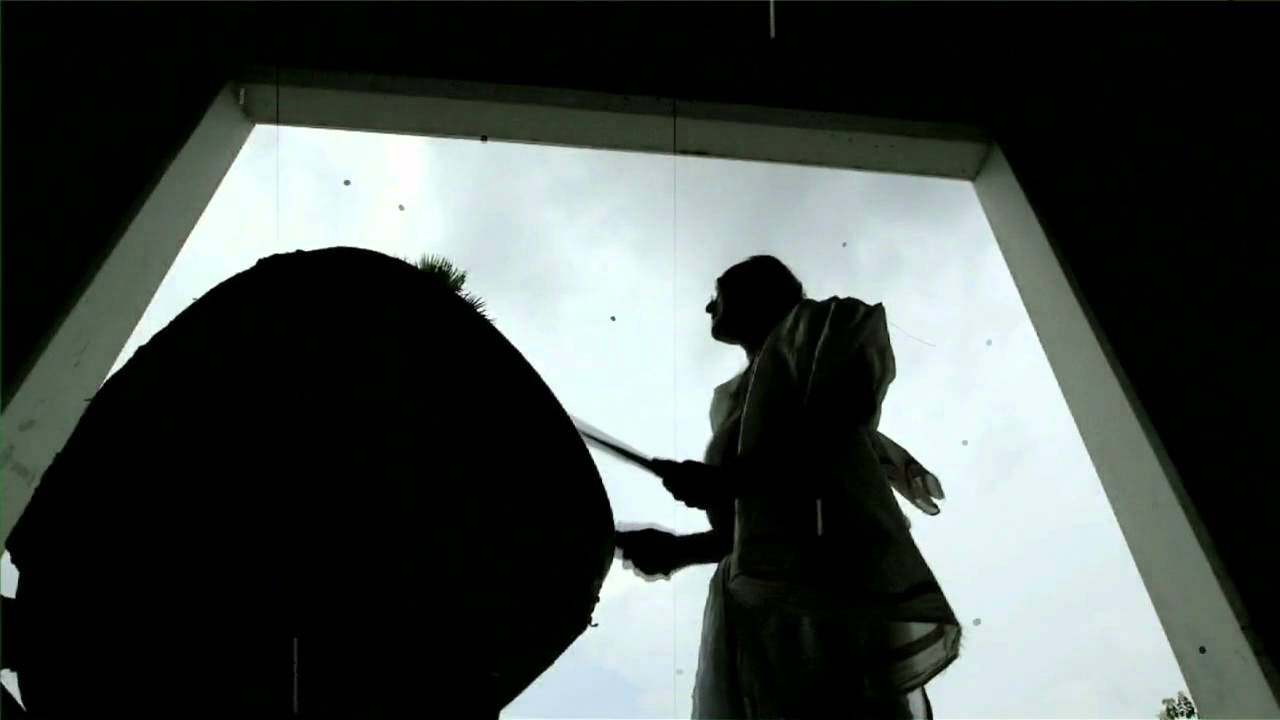
Doba is an instrument related to religious life of the Assamese People. In almost all religious institutions such as, Naam-ghar. The Xatras, ancient temples etc. Doba is played. In every Naam- Ghar of rural Assam, one will invariably find a Doba. The elegant sound of Doba played at a definite time everyday, creates an genteel and holy ambience in the villages, and reminds people of the time as well. It is difficult to estimate since when the Doba is played in Assam, however, it may be assured of that it is an ancient musical instrument. Though the usage are different, some people believe that Doba is a modified from of ancient Communication drums. The larger than life, heavy sound of Doba attracts everyone’s attention easily. Doba has a particular significance on the life of rural people. Doba played at the Naam-ghor , implies arrival of the evening and time to be back home.
http://www.anvesha.co.in/doba_en.htm
Music and Musical instruments:
A basic characteristic of the ethnic music of Assam is its descending scale which distinguishes it from the raga-based or folk music from the rest of India. This style is shared by ethnic music of the hill people surrounding the state of Assam, and by the music of Thailand, Myanmar and China. Furthermore, the tunes are structured in a pyramid, in contrast to the music of rest of India. Assam is a state with valleys and hills, and the home of many ethnic tribes. Just as the geography and varied people co-exist, the pulsating Bihu songs co-exist with languorous music of other forms. We can categorize the music of Assam as Folk music and Bhakti Music. Further folk music can be divided as regional folk music which includes Kamrupiya Lokageet, Goalpariya Lokageet, Ojapali, Tokari Geet, Deh Bisaror Geet, and Baramahi Geet, Ethnic folk music which includes Jhumur and Bharigaan. In Bhakti music there are Bargeet, Zikir and Zari, Ainaam, and Dihanaam. Other than that Bihu songs and Modern songs are very popular in Assam.
Music and musical instruments in Assam there is indeed, God's plenty. There are numerous kinds of musical instruments that are indigenous to the land. ‘Gana badya' means ‘tal'. Different types of tals are ‘Bhor tal', ‘khanjarika', ‘mandira' or ‘manjeera', ‘khutialal', ‘karatal', ‘ramtal', ‘taka' etc. Different types of bells are ‘ghanta', ‘kanh' (barkanh, sarukanh). Small ghanta-like instruments are used by dancers. They are ‘kikini', ‘junuka', and ‘nupur'. There is another instrument called ‘sushir jantra': its differant froms are ‘singha', ‘pempa', ‘conch', ‘banshi', ‘benu or muruli', ‘kali', veru', ‘sutuli' and ‘gagona'. There are also different forms of ‘ananda badya', like ‘rana', ‘dama', ‘nagara', ‘danka', ‘dimdim', ‘dunduvi', ‘joydhaka-dhak', ‘beer-dhak', ‘khola', ‘mridaga', ‘doba'. The varieties of dhol are ‘bordhol', ‘pati dhol', ‘dhepa dhol', joy dhol', ‘madala', ‘dholak', ‘khumuchi'.The ‘dambaru' and the tabla are popular instruments. These musical instruments are used in religious songs, Bihu dances and in singing Bargeet – the devotional songs that are based on different ragas. Many of the above instruments are used even today, and have a long history.

Информация по комментариям в разработке