The Rainbow Eucalyptus (Eucalyptus deglupta) is a fast-growing, tropical tree known for its multicolored, peeling bark, which gives it its distinctive and eye-catching appearance. Native to the rainforests of the Philippines, Indonesia, and Papua New Guinea, this tree is the only eucalyptus species found naturally in the Northern Hemisphere. It is widely grown as an ornamental tree in tropical and subtropical regions, admired for its striking rainbow-like bark and towering height.
Trunk and Bark
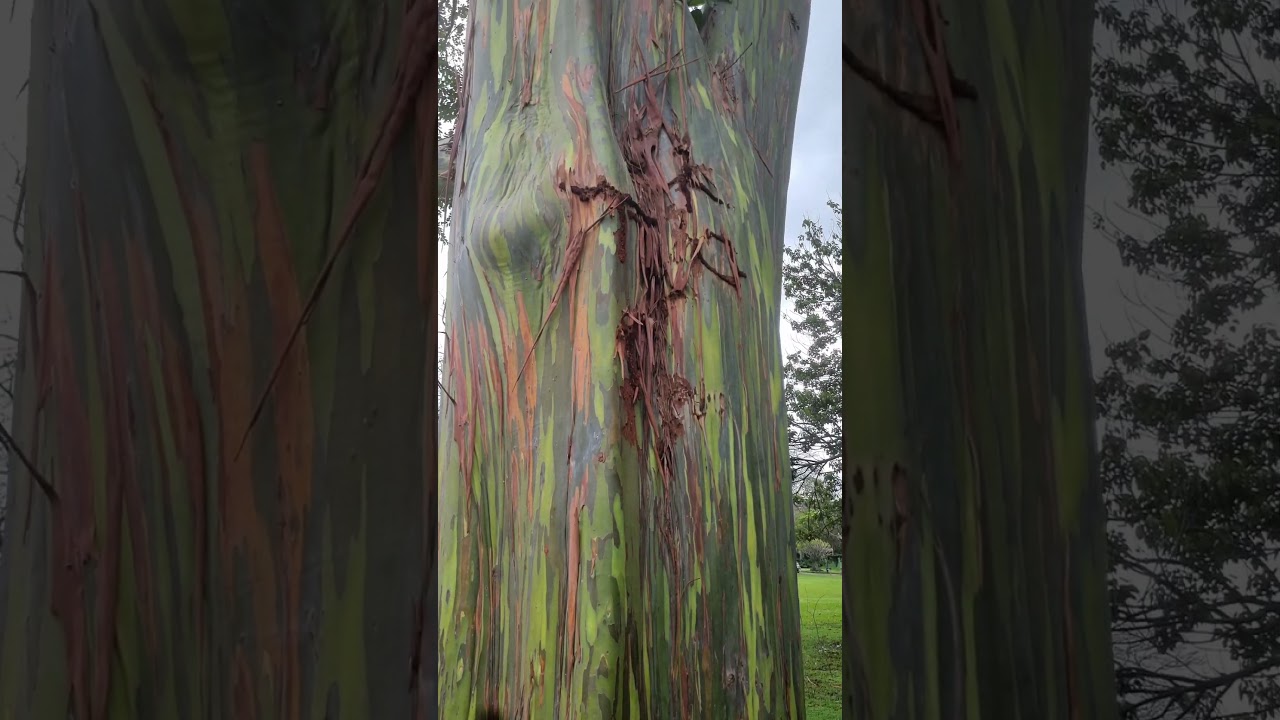
The most notable feature of Eucalyptus deglupta is its smooth, multi-colored bark. As the bark peels away in strips throughout the year, it reveals a bright green inner layer that gradually changes color as it matures. The exposed bark transitions through shades of blue, purple, orange, red, and eventually brown before the cycle starts again. This constant renewal of the bark results in the tree’s signature "rainbow" appearance, making it one of the most colorful and visually stunning trees in the world.
The trunk is tall, straight, and can grow to an impressive height, often reaching 60–75 meters (200–250 feet) in its native habitat. In cultivation, it typically grows to around 30–40 meters (100–130 feet), though it can exceed this under optimal conditions. The trunk is usually free of branches for much of its height, allowing the colorful bark to be fully visible.
Leaves and Foliage
The leaves of the Rainbow Eucalyptus are evergreen, lance-shaped, and arranged in an alternate pattern. They are leathery in texture, dark green on the upper surface, and paler underneath. The leaves can grow up to 15 cm (6 inches) long and emit a faint eucalyptus scent when crushed. Unlike many other eucalyptus species, the foliage of Eucalyptus deglupta is not heavily aromatic, and the tree is mainly grown for its ornamental value rather than for its essential oils.
Flowers and Fruit
Eucalyptus deglupta produces small, white to cream-colored flowers that grow in clusters at the tips of the branches. The flowers are not particularly showy but attract bees and other pollinators. The flowering season varies depending on the climate but often occurs during the summer months. After pollination, the tree produces small, woody seed capsules, each containing numerous tiny seeds. These capsules mature and release their seeds, which are dispersed by wind.
Habitat and Growing Conditions
In its native habitat, Rainbow Eucalyptus thrives in tropical rainforests, where it benefits from high humidity, consistent rainfall, and warm temperatures. It prefers moist, well-drained soils and is often found near rivers or in other areas with a steady water supply. In cultivation, it is best suited to tropical and subtropical climates with similar growing conditions. While the tree can tolerate short periods of drought, it requires regular watering, especially during dry seasons, to maintain healthy growth.
The tree grows best in full sun and benefits from plenty of space to accommodate its rapid growth. It can grow up to 3 meters (10 feet) per year under ideal conditions, making it one of the fastest-growing trees in the world. However, it is not frost-tolerant and should be planted in areas where temperatures remain above freezing year-round.
Cultivation and Care
Eucalyptus deglupta is relatively low-maintenance once established, but young trees require regular watering to support their rapid growth. The tree prefers deep, fertile soils but can adapt to a range of soil types as long as they are well-drained. Mulching around the base helps retain moisture and reduce weed competition. Pruning is generally not necessary, as the tree naturally develops a straight, tall trunk.
Due to its rapid growth and large size, Rainbow Eucalyptus is best suited for spacious landscapes, parks, or large gardens. It is often used as a shade tree or as an ornamental specimen, where its colorful bark can be fully appreciated. In tropical regions, it is sometimes planted in rows as a windbreak or along roadsides for its aesthetic appeal.
Propagation
Propagation is typically done through seeds, which are easily collected from the mature capsules. The seeds can be germinated in a warm, humid environment and transplanted once they reach a sufficient size. Eucalyptus deglupta can also be propagated through cuttings, though this method is less common.
Conservation and Uses
In its native range, Eucalyptus deglupta plays a vital role in tropical ecosystems, providing habitat and food for various wildlife species. However, it is also widely grown in commercial plantations for its wood, which is used in pulp and paper production due to its fast growth and high yield. The wood is lightweight, pale in color, and not particularly durable, so it is not typically used for high-quality timber products.

Информация по комментариям в разработке