Piazza Mattei, Fontana delle Tartarue e la ‘finestra murata’ - The Turtle Fountain and closed window in Rome
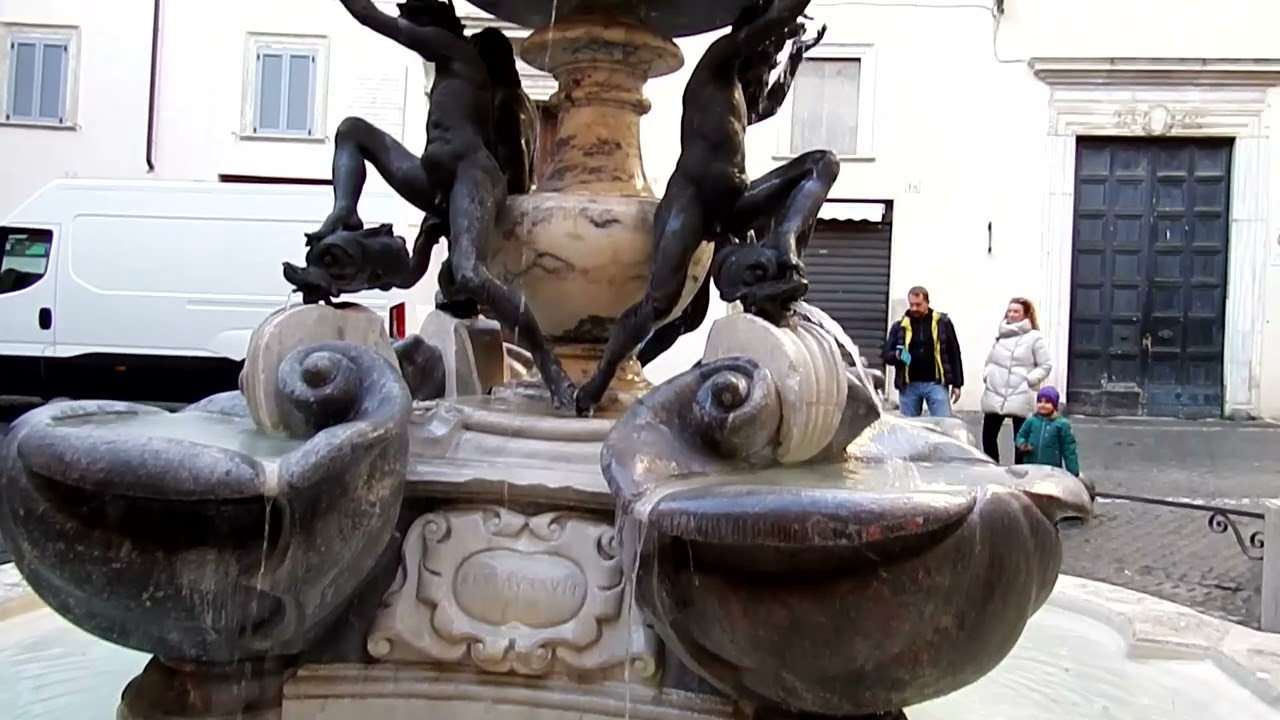
The "turtle fountain and closed window" refers to Rome's famous Fontana delle Tartarughe (Fountain of the Turtles) in Piazza Mattei, connected by legend to a walled-up window in the adjacent Palazzo Mattei, symbolizing Duke Muzio Mattei's impressive feat of building the fountain overnight to win his fiancée's hand after losing wealth gambling, though the palace was built later, making the story likely mythical but charming.
The Legend
Duke Muzio Mattei, a notorious gambler, lost his fortune and was denied his daughter's hand in marriage. To prove his worth, he hosted a lavish party and, by morning, had the stunning Turtle Fountain built.
He showed the fountain from his window to his future father-in-law, who, impressed, agreed to the marriage. To commemorate the event (and perhaps his folly), Mattei had the window bricked up, creating the famous "closed window" visible today.
Designed by Giacomo della Porta, with sculptures by Taddeo Landini, the fountain was built between 1581-1588. The Turtles: The bronze turtles weren't in the original design; they were added during a restoration in the 1650s, possibly by Bernini, to balance the composition after water pressure The Mattei palace was built decades after the fountain, disproving the legend's timeline, but the story endures as a popular Roman tale.
La "fontana delle tartarughe e la finestra chiusa" si riferisce alla famosa Fontana delle Tartarughe di Roma in Piazza Mattei, collegata dalla leggenda a una finestra murata nell'adiacente Palazzo Mattei, a simboleggiare l'imponente impresa del Duca Muzio Mattei di costruire la fontana durante la notte per vincere la mano della sua fidanzata dopo aver perso una fortuna al gioco d'azzardo. Sebbene il palazzo sia stato costruito in seguito, la storia è probabilmente mitica ma affascinante.
La leggenda
Il Duca Muzio Mattei, noto giocatore d'azzardo, perse la sua fortuna e gli fu negata la mano della figlia. Per dimostrare il suo valore, organizzò una sontuosa festa e, al mattino, fece costruire la splendida Fontana delle Tartarughe. Mostrò la fontana dalla sua finestra al suo futuro suocero, che, impressionato, acconsentì al matrimonio. Per commemorare l'evento (e forse la sua follia), Mattei fece murare la finestra, creando la famosa "finestra chiusa" visibile ancora oggi.
Progettata da Giacomo della Porta, con sculture di Taddeo Landini, la fontana fu costruita tra il 1581 e il 1588. Le tartarughe: le tartarughe in bronzo non erano presenti nel progetto originale; furono aggiunte durante un restauro nel 1650, forse dal Bernini, per bilanciare la composizione dopo la pressione dell'acqua. Il palazzo Mattei fu costruito decenni dopo la fontana, smentendo la cronologia della leggenda, ma la storia sopravvive come un racconto popolare romano

Информация по комментариям в разработке