The Psychology of Millennial Generation
Who are Millennials and why do they think, feel, and struggle the way they do?
The Millennial generation, typically defined as people born between 1981 and 1996, grew up during rapid technological change, economic instability, and constant social comparison. This video explores the psychology of Millennials by examining how their childhood environments, digital exposure, parenting styles, and shifting definitions of success shaped their mental health, behavior, and identity.
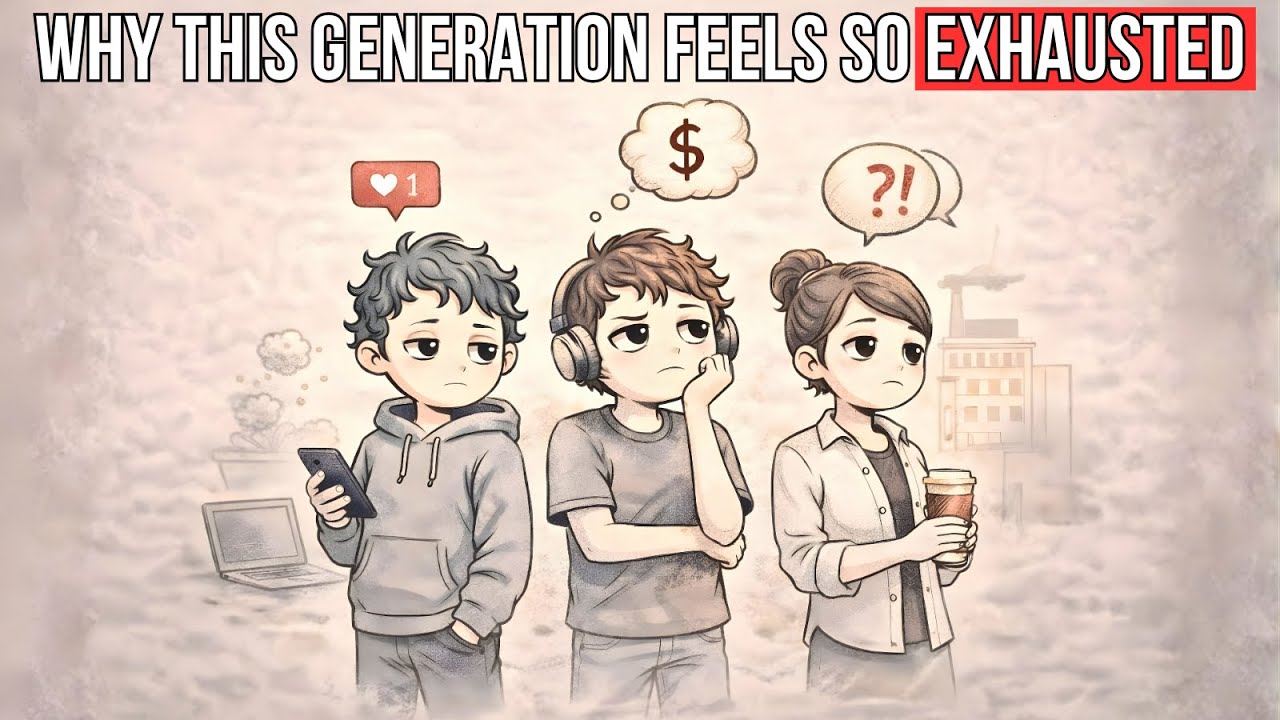
Unlike previous generations, Millennials were raised with high expectations, emotional validation, and the belief that they could “be anything.” But adulthood confronted them with student debt, unstable careers, rising living costs, and social media pressure that turned life into a constant comparison game. This psychological mismatch created patterns of overthinking, burnout, self-doubt, and chronic exhaustion not because Millennials are weak, but because their nervous systems adapted to a world that never slows down.
By watching this video, you will understand Millennial psychology, how dopamine-driven social media affects their motivation, why Millennials struggle with anxiety, identity confusion, and delayed adulthood, and how generational psychology explains their deep self-awareness alongside emotional fatigue. This breakdown connects human behavior, neuroscience, generational psychology, mental health, and cultural conditioning to clearly define what it means to be a Millennial and why this generation feels awake, tired, ambitious, and lost at the same time.
This video is not about blaming Millennials or glorifying them. It’s about understanding how history, technology, and psychology collided to shape an entire generation’s inner world.
#millennialgeneration #millennials #psychology
Информация по комментариям в разработке