Mercedes Vans - fully electric future - explained
Mercedes-Benz Vans will further target premium segments and focus on profitable growth. The division concentrates on growing high margin regions, channels, products, and industries. Serving both private and commercial customers, Mercedes-Benz Vans will pursue a differentiated approach to each segment. For private vans, this translates into the adaptation of the overarching Mercedes‑Benz luxury strategy to make it an integral part of all products, services, customer interactions and digital experiences. Which is why Mercedes-Benz Vans will further extend the top-end of its product portfolio moving forward – for example, with the upcoming new V-Class. Parallel to this, the division is pursuing a premium strategy for the commercial vans segment, that represents around 80% of the division’s sales share serving different industries.
Today, Europe is the division’s strongest market – with a 60% share of total sales worldwide. And in the U.S., Mercedes‑Benz Vans doubled its market share from 8% in 2018 to 16% in 2022, ensuring a strong market position as well.
Looking ahead, significant growth potential is being seen in the U.S. for premium commercial large vans and in China for luxury private vans. In the U.S., Mercedes‑Benz Vans is aiming to profitably and substantially increase sales by 2030 as well as to expand the portfolio by adding VAN.EA-based commercial vans to the line-up. Both in the U.S. and China, Mercedes‑Benz Vans for the first time aims to offer VAN.EA-based private vans in an unparalleled luxury positioning to more strongly cater to the expectations of its sophisticated customers. In the U.S., Mercedes‑Benz Vans will offer for the first-time ever a privately positioned midsize luxury van.
Mercedes-Benz Vans is reorganising the global production network with its first pure electric light commercial vehicles (eLCV) plant in Jawor, Poland. The plant aims to set new standards in terms of productivity, lean operations and sustainability for the manufacturing of premium eLCVs worldwide. The production site for the VAN.EA-based large vans will be net carbon neutral just like all own plants of Mercedes‑Benz Vans. For the first time, Mercedes-Benz Vans plans to cover 100% of its energy needs through renewable energy. Mercedes-Benz Vans aims for a combination of different renewable energy sources to cover the electricity and heat requirements. These are expected to include electricity from maximized use of photovoltaics, wind power and heat generation via air heat pumps, geothermal and solar thermal energy and, if necessary, as fallback in peak times, a small amount of biogas.
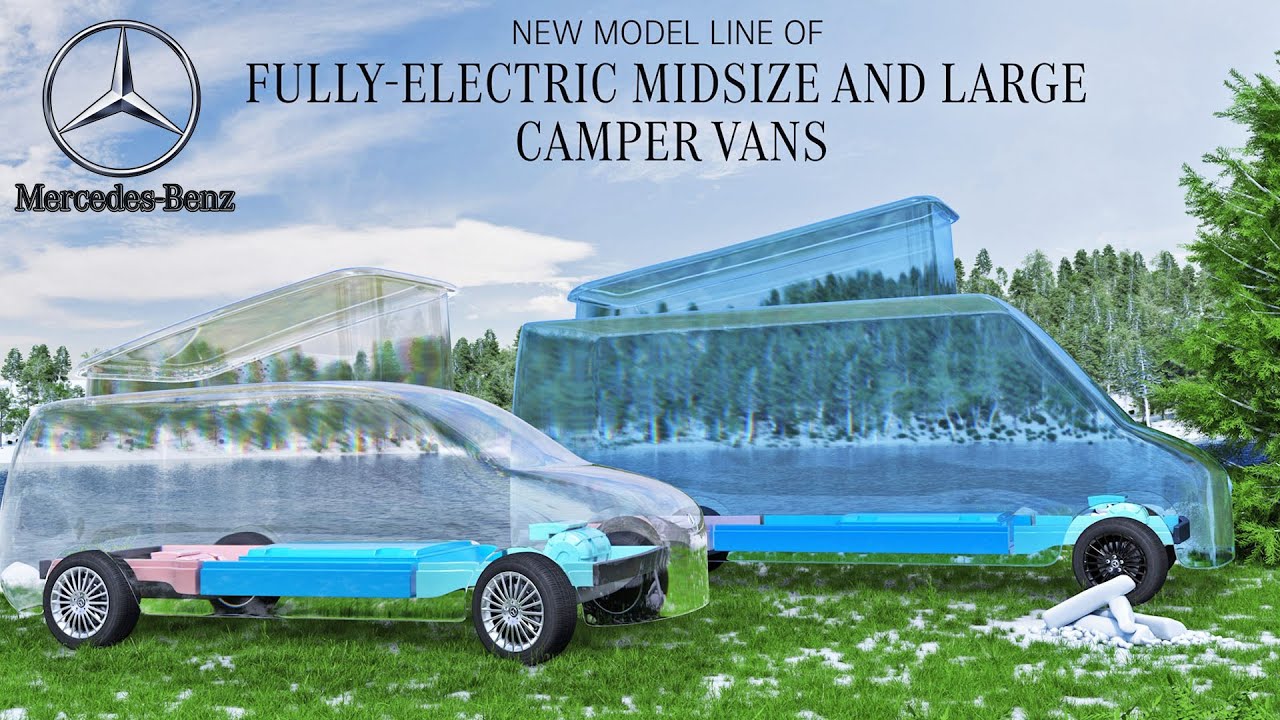
Additionally to the eSprinter and the Sprinter vans with ICE drivetrains, the large cab chassis based on VAN.EA will also be built in Düsseldorf, Germany. The plant in Ludwigsfelde, the second of two plants in Germany, will continue to produce Mercedes‑Benz Sprinter and Mercedes‑Benz eSprinter and will shift to become a competence center for eVan customization, for example for camper vans. In addition, Mercedes‑Benz Vans will build VAN.EA-based midsize vans in its plant in Vitoria, Spain. Other plants will follow.
0:00 English
4:37 Deutsch
Thanks for supporting:
► https://www.buymeacoffee.com/Kondor
► Comment & Like 👍
► Subscribe and Share ✔️
► Turn on the bell to never miss an upload! ((🔔))
►Instagram: / kondorcars
► Subscribe: https://bit.ly/KondorCars
► Car Factory: http://bit.ly/CarProduction
► Crash Tests • 2019 Skoda Karoq - Crash Test - Ancap (Saf...
► Car Compare • Peugeot 208 vs Renault Clio, Clio vs 208, ...
#mercedes
#electric
#mercedesbenz

Информация по комментариям в разработке