VeChain (VET): Transforming Supply Chains with Blockchain
#crypto #vet #bitcoin #investment
Introduction
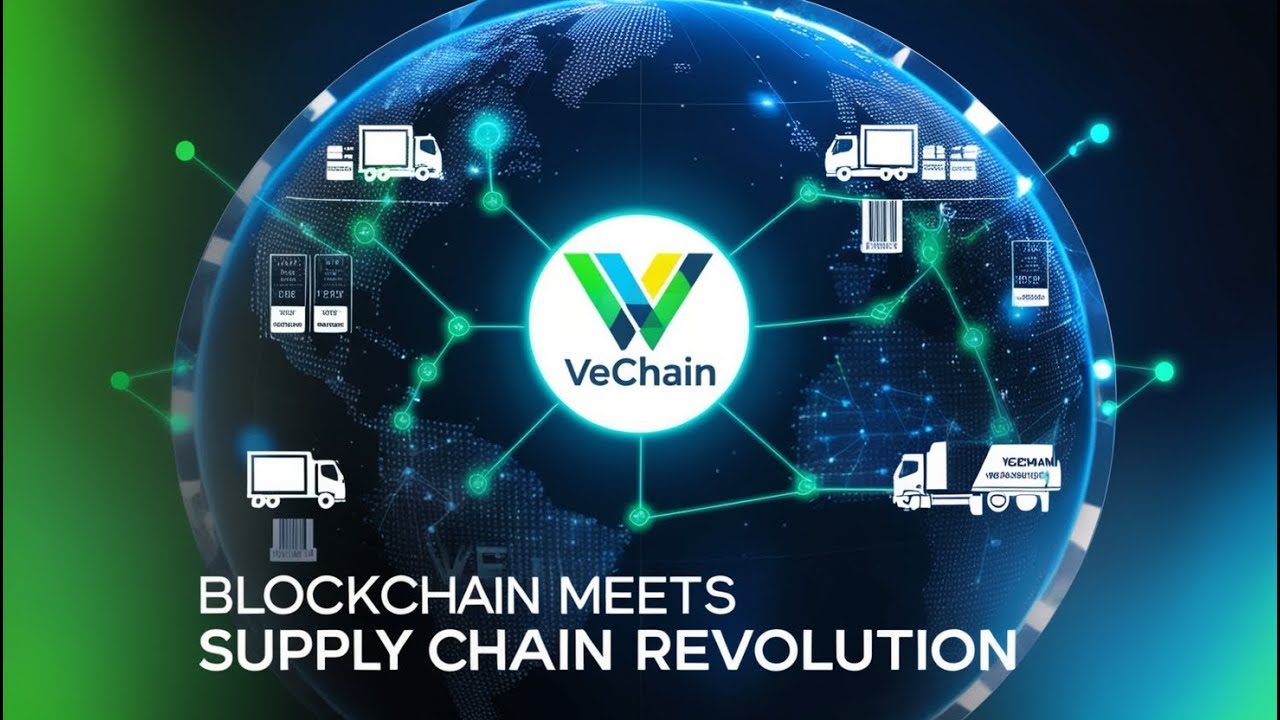
Welcome back! Today, we’re diving into VeChain (VET), a blockchain platform revolutionizing supply chains and beyond. VeChain is designed to enhance transparency, trust, and efficiency in global industries. From product traceability to IoT integration, VeChain is much more than a cryptocurrency. By the end of this episode, you’ll understand its history, use cases, and why it’s a game-changer for enterprises worldwide.
1. The Origins of VeChain
VeChain was founded in 2015 by Sunny Lu, the former Chief Information Officer of Louis Vuitton China. Initially, it was a subsidiary of Bitse, one of China’s largest blockchain companies. In 2018, VeChain rebranded and launched its own blockchain, VeChainThor. The project is headquartered in multiple countries, including China, Singapore, and the U.S., emphasizing its global presence.
The goal? To use blockchain to solve inefficiencies in industries like luxury goods, agriculture, healthcare, and automotive.
2. Unique Features of VeChain
Dual-Token Economy:
VeChain operates with two tokens:
VET: The main token for transferring value and governance.
VTHO: Used to pay for transaction costs, generated by holding VET.
Proof of Authority (PoA) Consensus:
Unlike PoW or PoS, PoA relies on 101 validated Authority Masternodes. Each node undergoes strict KYC verification, ensuring security and efficiency while consuming less energy.
VeChain ToolChain:
A blockchain-as-a-service platform enabling businesses to deploy blockchain solutions with minimal technical effort. Use cases include food safety tracking, carbon footprint monitoring, and digital identity solutions.
3. Real-World Applications and Partnerships
VeChain’s focus on enterprise adoption is reflected in its partnerships:
Supply Chain Management: Walmart China uses VeChain for food traceability, ensuring safety and quality.
Automotive Industry: Renault leverages VeChain for vehicle maintenance records.
Sustainability: VeChain enables carbon footprint tracking for eco-conscious businesses.
Healthcare: Blockchain tracks medical supplies to ensure authenticity and proper handling.
These partnerships demonstrate VeChain’s ability to provide actionable insights and improve operational efficiency across sectors.
4. Challenges and Future Potential
While VeChain has achieved significant milestones, it faces challenges like regulatory compliance and competition from other enterprise blockchains. However, its focus on IoT integration, sustainability, and expanding partnerships positions it as a frontrunner in blockchain-based enterprise solutions.
Future developments include upgrading its PoA consensus mechanism and enhancing cross-chain interoperability to broaden adoption.
Conclusion
VeChain stands out as a blockchain tailored for real-world applications, particularly in supply chain management. Its dual-token economy, enterprise-grade features, and strategic partnerships make it a unique and impactful player in the blockchain space. Thanks for listening, and don’t forget to subscribe for more blockchain insights. Until next time, stay curious!

Информация по комментариям в разработке