Aircraft safety is not determined by testing alone. It is established through structured, traceable safety assessments that evaluate hazards, failure conditions, and risk at the aircraft and system levels. In this video, we examine ARP4761 and how it provides the methodological foundation for civil aircraft safety analysis.
Published by SAE International, ARP4761 defines the structured processes used to perform Functional Hazard Assessments, system safety evaluations, and quantitative risk analyses. While not a regulation itself, it is widely accepted by authorities such as the Federal Aviation Administration and the European Union Aviation Safety Agency as an acceptable means of compliance for demonstrating that aircraft meet required safety objectives.
This video explains how ARP4761 methods connect hazard classification to probability targets, how safety assessments evolve alongside system architecture, and how they integrate with development assurance frameworks such as ARP4754A. The focus is on engineering discipline, structured analysis, and evidence generation — not simplified risk analogies or checklist thinking.
⏳Timeline
0:00 ARP4761 Aerospace Safety
0:20 Video Content Overview
0:38 Need for Assessment - From Regulation to Practice
1:26 Understanding ARP4761 - The Industry Standard
2:11 Core Safety Methods -Analyzing the System
4:41 System Development - The Safety- Design Loop
5:38 Program Implications - A Lifecycle Process
6:09 Professional Take Away - Structuring Judgement
Engineering Framing
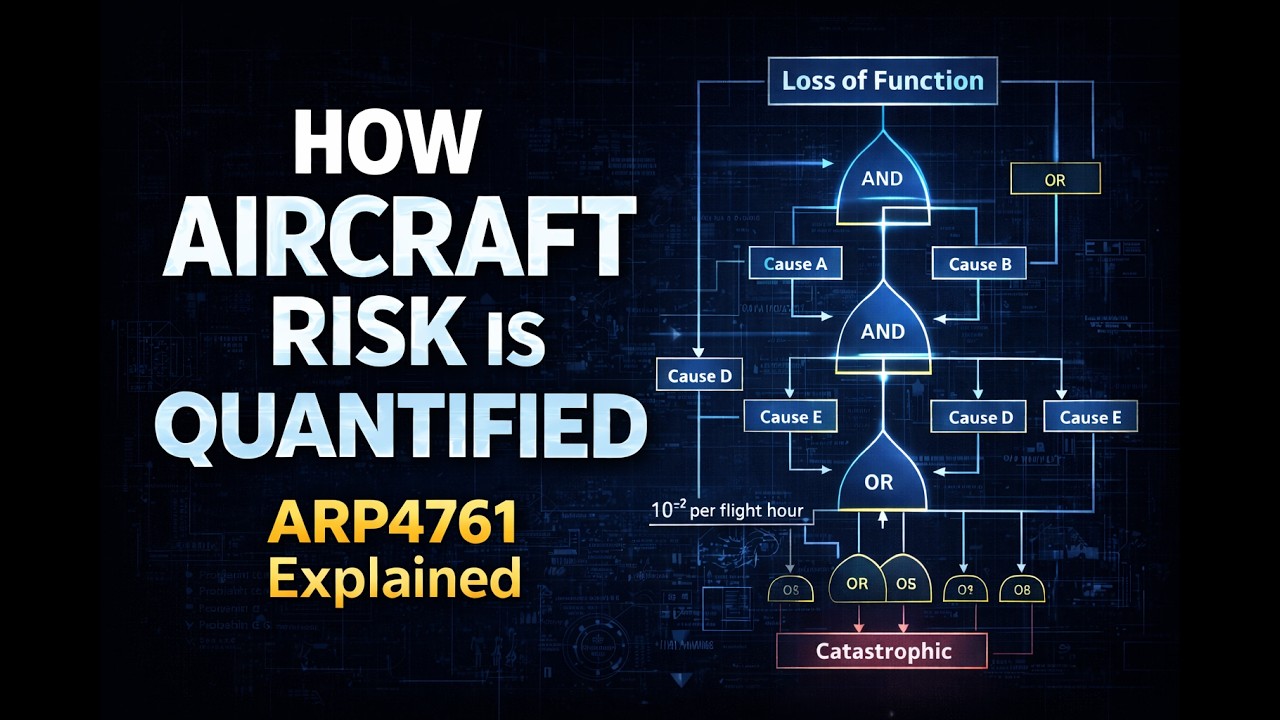
ARP4761 provides a structured approach for identifying failure conditions, classifying hazard severity, and assessing whether system architectures meet regulatory safety objectives. Methods such as Functional Hazard Assessment (FHA), Preliminary System Safety Assessment (PSSA), System Safety Assessment (SSA), Fault Tree Analysis (FTA), Failure Modes and Effects Analysis (FMEA), and Common Cause Analysis (CCA) are used to evaluate both qualitative and quantitative aspects of risk. These analyses inform Development Assurance Levels and architecture decisions but do not independently certify a system. Certification approval relies on objective evidence generated through integrated safety and development processes.
⏳
What You Will Learn:
What ARP4761 is and where it fits in the certification architecture
How Functional Hazard Assessments classify failure conditions
The difference between FHA, PSSA, and SSA
How Fault Tree Analysis and FMEA support quantitative evaluation
How probability objectives relate to hazard severity categories
How safety assessment integrates with system development frameworks
Key Takeaway:
ARP4761 does not guarantee safety; it provides the structured analytical framework that ensures aircraft risks are systematically identified, evaluated, and documented within the certification process.
#aerospace, #engineering, #aviation, #technology, #aerospaceengineering, #phoenixquillaerospace, #safetyengineering, #certification, #riskanalysis, #ARP4761

Информация по комментариям в разработке