Teaching techniques matter, but they are only effective when students feel safe, respected, and valued. My first priority is to create a supportive learning environment, teach in an authentic and accessible way, and build genuine academic relationships. When trust is established, engagement follows naturally.Teaching Non-Traditional Students Effectively: How Inclusive Teaching Drives Achievement
Non-traditional students in UK higher education form a diverse and overlapping group whose learning journeys are shaped far more by life circumstances than by academic ability. They include mature and returning learners, working and commuting students, carers, first-generation entrants, students from alternative routes, international and migrant learners, and those from under-represented or lower-income backgrounds. Across these groups, lecturers consistently observe high motivation, resilience, practical judgement, and rich lived experience, alongside shared pressures related to time, access, confidence, belonging, and unfamiliarity with academic conventions. Research and practice show that lower engagement is rarely a question of capability or ambition, but the result of structural and cultural barriers such as the hidden curriculum, rigid delivery models, and limited visibility on campus. Student outcomes improve most when teaching is inclusive by design, expectations are made explicit, relationships are built early, and academic support is embedded proactively within the learning experience.
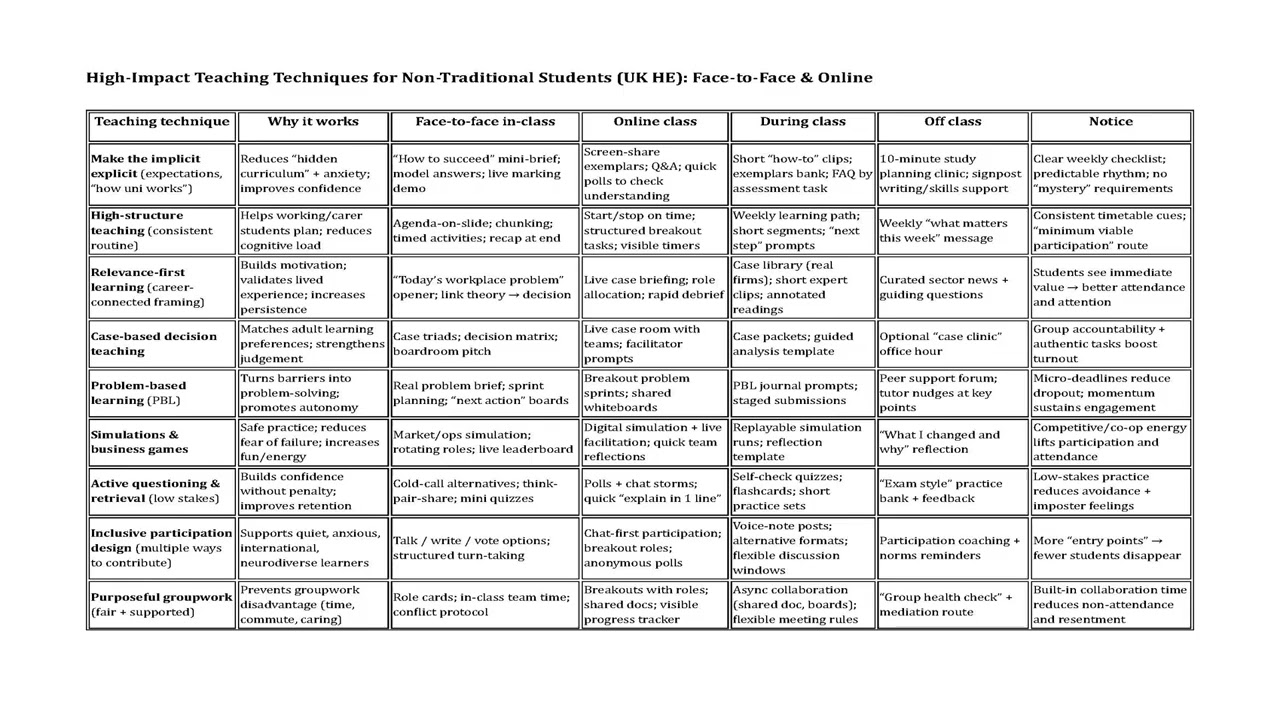
Teaching non-traditional students effectively therefore requires more than applying isolated techniques; it depends on inclusive design, relational trust, and practical relevance. High-impact practice combines clear structure with flexible delivery, connecting theory to real-world contexts through applied case studies, problem-based learning, simulations, scaffolded assessment, and purposeful groupwork across face-to-face and online settings. My own approach is calm, structured, inclusive, and interactive, focused on making complex ideas accessible and building confidence gradually. I use micro-lectures followed by problem-solving tasks, international business cases, reflective questions, and group discussion, offering multiple ways to participate to support diverse voices. Technology is embedded meaningfully to enhance learning rather than distract from it, while feedback, assessment guidance, and templates are designed to develop critical thinking and visible progress. Ultimately, while techniques matter, they only work when students feel safe, respected, and valued; when trust is established through authentic teaching and strong relationships, engagement increases naturally, attendance improves, and inclusive teaching translates student potential into achievement.
Teaching techniques matter, but they are only effective when students feel safe, respected, and valued. My first priority is to create a supportive learning environment, teach in an authentic and accessible way, and build genuine academic relationships. When trust is established, engagement follows naturally.

Информация по комментариям в разработке