Why Your Marketing ‘Doesn’t Work’ (and How Geofencing + Funnels Fix It)
The speaker shares his background as an entrepreneur—from giving basketball lessons and hiring teammates, to college side businesses, to starting a marketing company—and introduces a core idea he hears from clients: “my marketing doesn’t work.” Using a marathon analogy, he explains that businesses must support customers throughout the entire buying journey, not just at the moment of purchase. He outlines a marketing funnel approach: top-of-funnel brand awareness (including programmatic tactics like geofencing, billboards, and street marketing), mid-funnel engagement via social platforms like Facebook, Instagram, and LinkedIn, and bottom-of-funnel conversion where many decisions happen on Google search. He argues most companies overinvest at the bottom and underinvest in awareness and consideration.
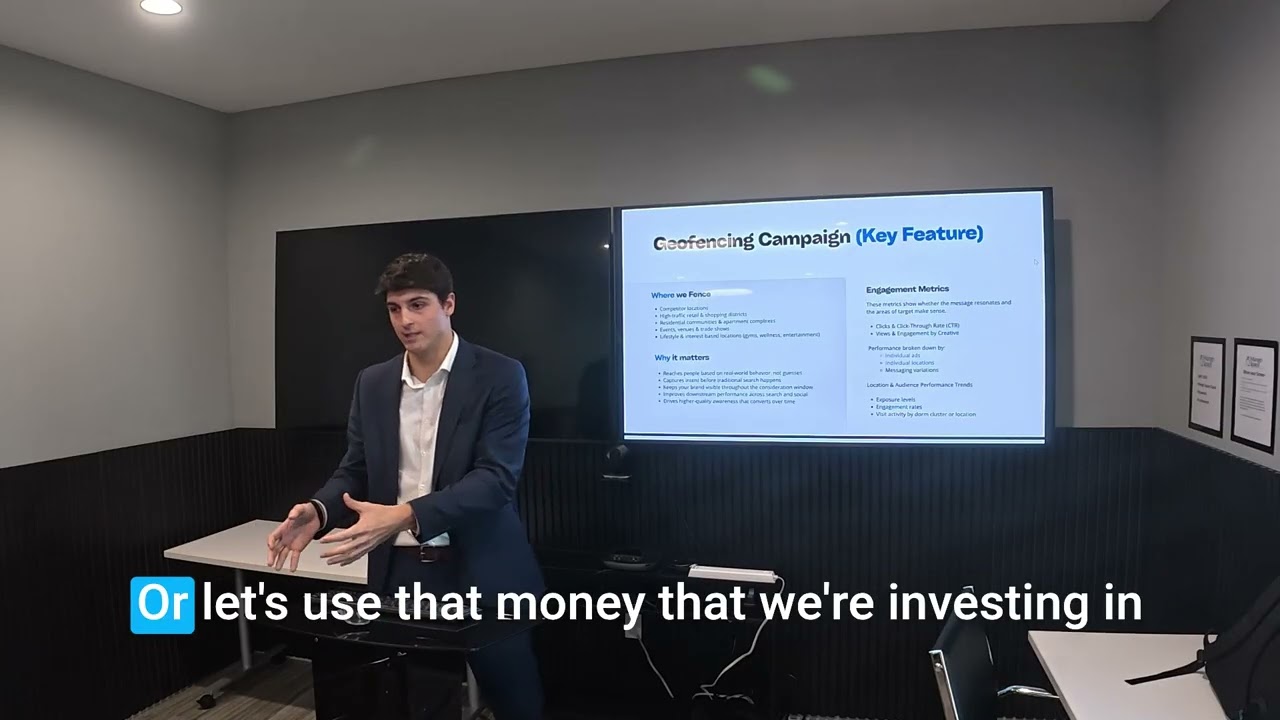
A large portion of the episode explains geofencing: setting a digital boundary around a physical location to capture device IDs (not personal data) when people enter, then serving ads for up to 90 days across mobile, tablet, websites/apps, pre-roll video, and connected TV/OTT. He contrasts geofencing with geotargeting radius-based ads, emphasizing geofencing’s precision (down to about 10 feet) and its usefulness for targeting competitor locations, retailers, shopping districts, residential communities, apartment complexes, and events. He highlights measuring performance by individual fences and ads, tailoring creative per location, and tracking engagement metrics to optimize budgets.
The speaker also covers traditional and complementary strategies: Google search campaigns focused on high-intent keywords with early optimization and click-through measurement; OTT streaming ads on platforms like Hulu, Peacock, Disney+, and Paramount with exposure and engagement tracking; and Meta (Facebook/Instagram) video-first campaigns and retargeting built from geofenced or website-visitor audiences, including testing call-to-actions and using campaign-specific landing pages (with an example of geofencing the “TY Event” and driving to a hidden event landing page).
For physical retail and product businesses, he describes enhanced attribution through a partnership with Clear Cogs, which integrates with point-of-sale systems to connect ad exposure and store visits to transaction and revenue reporting. He describes an AI-driven dashboard that labels products as “stars” and “dogs” and recommends pairing promotions to improve underperforming items and stabilize revenue over time.
He emphasizes continual optimization—creative swaps, budget reallocations, A/B testing, biweekly reporting, monthly review calls, and 30/60/90-day check-ins—illustrated through a caddying story about making a small change to break a slump. The episode ends with brief client examples: a New York franchise growing from 14 to 20 locations using pre-opening geofencing and rewards signups; University of Tennessee OTT targeting during a major SEC game to promote a nursing graduate program; and YMCA neighborhood/apartment geofencing in the Nashville area to reach family-dense communities. He closes by noting the company is based in Tampa, references an exclusive partnership with Clear Cogs, and shares the trademark message: “target smarter so you can scale faster.”








Информация по комментариям в разработке