Wynchfield Road was a short street lined with houses with the quiet elegance that only fine craftsmanship, age, and unremitting care can bestow upon dwellings. Number Eight was not the largest house on Wynchfeild Road, but it was not the smallest. It was a stately Georgian place, with a polished brass knocker upon the door.
“Coo!” said Charlie. “He lives in a palace!”
Miss Price felt she knew something about the type of people living in palaces and the type. “You gave us the wrong address,” she accused.
Professor Emelius Browne got out of bed rather unsteadily.
“You don’t live here, do you?” asked the relentless Miss Price.
“But I do,” answered the professor. “Temporarily, at any rate.”
Miss Price let her eyes rest on the professor’s hat. It was undeniably battered. She lowered her gaze to glare almost out at the elbows. “Gracious me!”
The professor knew why. He walked over to a gaping hole in the forest garden of Number Eight and rapped with his cane at a huge metallic object that protruded from the hole. “Probably had something to do with this,” he said. “Live bomb, you know. Makes people nervous.”
Indeed, it made Miss Price extremely nervous. “Merciful heavens!” she cried. “Stand back, children! Take cover!”
But the curious children edged for a closer look at the closure thing.
“I should think you’d be terrified by the very idea of living here!” said Miss Price to Emelius Browne.
Emelius Browne was quite calm. “I have pondered, as I often do,” he told her. “In the perverse nature of things, this diabolical object is the best friend I’ve ever had. For enabling me to live like a king. Shal, for the first time we go in?”
“Certainly not!” said Miss Price.
“But he promised us lunch!” cried Carrie.
“He did, Mum,” Carrie reminded her.
“I’m hungry!” howled small Paul.
Emelius Browne opened the front door of Number Eight and bowed.
Miss Price sighed. She was also hungry. She made a wide circuit around the hideous object in the front garden and entered the house.
The hallway was dim since there were no windows, and the parlor was darker still. The professor had closed the shutters and drawn the drapes. He lit a candle and led the way into the dining room.
“Posh, I’d say,” said Charlie, gazing at the delicate old chairs grouped around the long, gleaming, mahogany table.
“Very posh,” said Emelius Browne. He busied himself lighting more candles. There were candles in mirrored sconces on the wall, candles on the sideboard, and candles in a heavy, many-branched candelabra on the table. When Emelius had finished, the room glowed gently.
“Why do you keep the curtains closed?” Paul wanted to know.
“So the coppers don’t peek in and catch him hiding out here,” said Charlie quickly.
Emelius paid no attention to this exchange. Carrying a candle, he went through a swinging door into what had to be a kitchen or a pantry. He returned in a moment with cheese on a silver dish and bread on a china plate.
“Bread and cheese?” exclaimed Charlie. “Is that all we get?”
Emelius Browne made another round trip through the swinging door. This time, he brought cold beef, butter, and a jar of marmalade.
“I have put the kettle on, and we shall have tea presently,” he announced.
“Real tea?” said Charlie.
“With sugar?” Paul asked.
“Naturally,” said Emelius. He dived back through the door to get the sugar bowl, the cream pitcher, and a plate holding several slices of cake. “There are also two kinds of cookies,” he told the children, “and fruit.”
“Now, this is something like!” crowed Charlie.
“We shall require a cloth,” said Miss Price, “and some utensils.”
“What’re utensils?” asked Carrie.
“Knives and forks and spoons,” said Emelius. “In that drawer over there. And bring the mats.”
The mats were linen, edged with lace, and the knives and forks were massive. Carrie stroked the handles with her thumb before she set them, shining, around the table.
Then the kettle sang; the tea was brewed, and the lunch was ready. Emelius sat in the big armchair at the head of the table, had a bit of beef and some fruit, and told amusing little stories about the theater. Miss Price and the children ate silently, as hungry folk usually do. When they were all satisfied and young Paul had four slices of bread with butter and marmalade, Miss Price pushed back her chair and fixed Emelius with a steady gaze.
“About that book, Mr. Browne,” she said. “Where is it?”
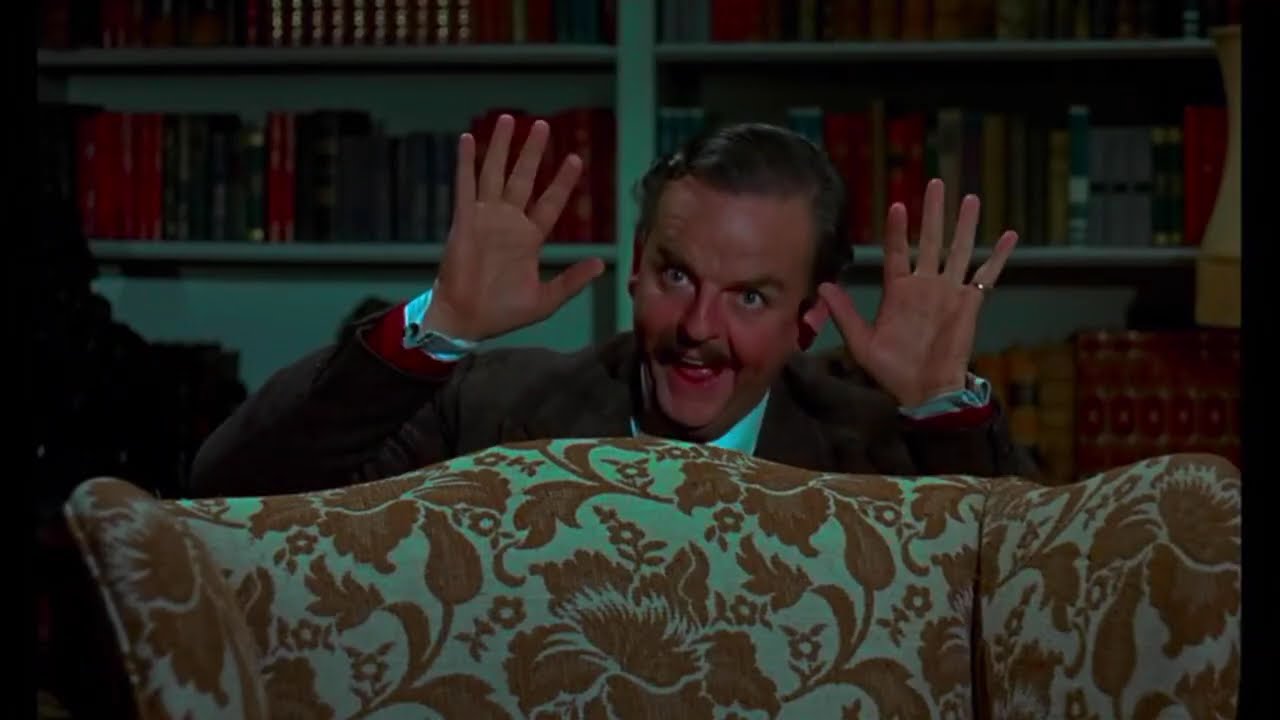
Emelius Browne sighed. “You are relentless, dear woman,” he told her. “The book is in the library, to which we will proceed after finishing our cheese.”
Paul had already finished his cheese. He took his little bird whistle out of his pocket and gave a blow to it. It hissed. “This is still no good,” said Paul.
“I am sorry, young sir.” Emelius put his hand into his pocket. “Here. You may have your penny back.”
Paul gladly took the penny and tried to hand the whistle to Emelius.

Информация по комментариям в разработке