Kaw Valley Church of Christ
#kawvalleychurchofchrist
#churchofchrist
Chris Freeman
Luke 14:7-24
The Parable of the Embarrassed Guest
The Parable of the Rich Guests
The Parable of the Great Supper
For whosoever exalteth himself shall be abased; and he that humbleth himself shall be exalted
Luke 14:7 And he put forth a parable to those which were bidden, when he marked how they chose out the chief rooms; saying unto them.
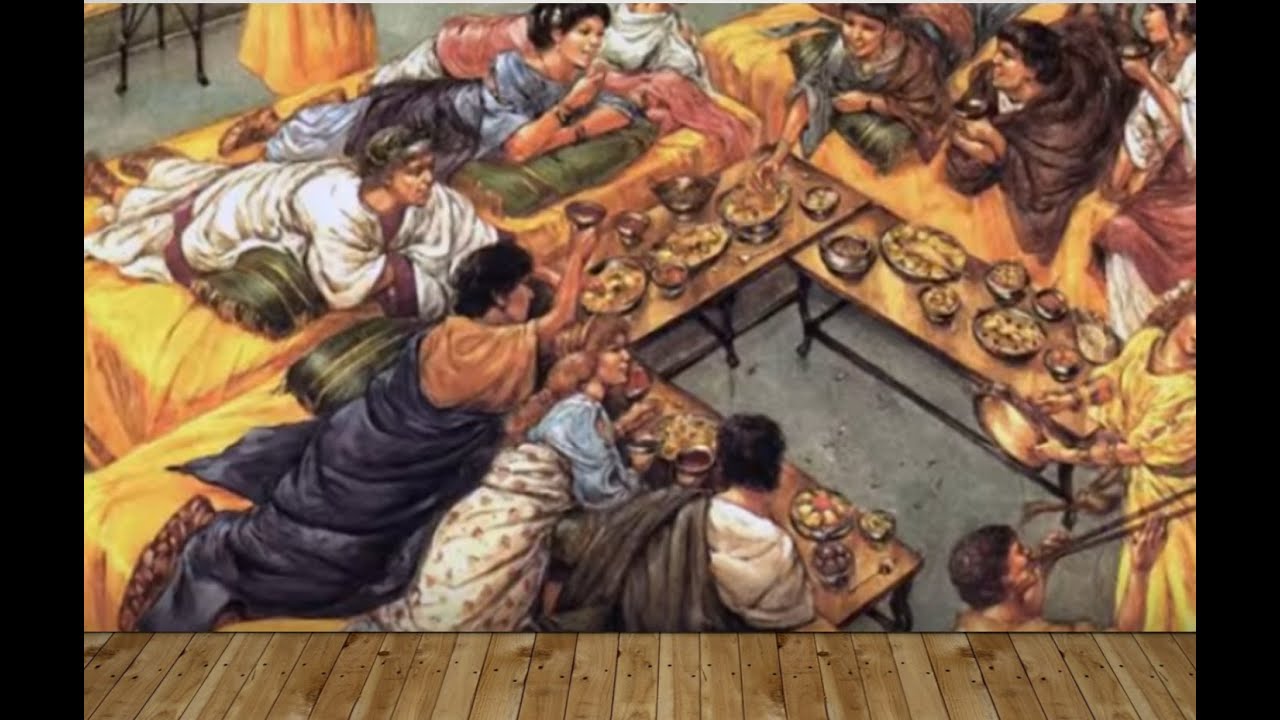
McGarvey – the triclinia, or Grecian table, then in use had three sections which were placed together so as to form a flat-bottomed letter U. The space enclosed by the table was not occupied. It was left vacant that the servants might enter it and attend to the wants of the guests who reclined around the outer margin of the table. The central seat of each of these three sections was deemed a place of honor.
Luke 14:8 When thou art bidden of any man to a wedding, sit not down in the highest room; lest a more honourable man than thou be bidden of him; Luke 14:9 And he that bade thee and him come and say to thee, Give this man place; and thou begin with shame to take the lowest room.
Luke 14:10 But when thou art bidden, go and sit down in the lowest room; that when he that bade thee cometh, he may say unto thee, Friend, go up higher: then shalt thou have worship in the presence of them that sit at meat with thee.
Worship – honor. Having explained how to avoid humiliation, Jesus tells the dinner guests how to gain honor: they should humble themselves.
McGarvey – the words here used by our Lord teach how to avoid earthly shame and to obtain worldly honor. But they form a parable which is intended to teach the great spiritual truth that true humility leads to exaltation.
As Jesus speaks, surely he had in mind this proverb.
Proverbs 25:6-7 Put not forth thyself in the presence of the king, and stand not in the place of great men: 7 For better it is that it be said unto thee, Come up hither; than that thou shouldest be put lower in the presence of the prince whom thine eyes have seen.
This doesn’t apply only to seating arrangements, or standing with royalty, but to all social engagements.
Luke 14:11 For whosoever exalteth himself shall be abased; and he that humbleth himself shall be exalted.
Luke 14:16 Then said he unto him, A certain man made a great supper, and bade many:
This parable is known as the parable of the great supper.
Bade many – this is the first invitation, which no one has declined.
Luke 14:17 And sent his servant at supper time to say to them that were bidden, Come; for all things are now ready.
Luke 14:18 And they all with one consent began to make excuse. The first said unto him, I have bought a piece of ground, and I must needs go and see it: I pray thee have me excused.
A LAME excuse: He says he has a field he must go and see – which seems to be a flimsy reason, for what man would purchase a field before seeing it?
Luke 14:19 And another said, I have bought five yoke of oxen, and I go to prove them: I pray thee have me excused.
Similar to the first man’s excuse, this one does not stand up to scrutiny. He has purchased oxen, but he has no idea whether they were worth the price? Whether the oxen can work the field? Like the first man’s excuse, this one also dishonors the host.
Luke 14:20 And another said, I have married a wife, and therefore I cannot come.
Like the ones before, this excuse doesn’t make sense. The man did not turn down the first general invitation and it is unlikely his circumstances have changed within the time that the first invitation went out, and this specific invitation. He could easily have kept this dinner appointment whether or not he was married.
McGarvey – These three excuses show: (1) That the guests had made their engagements, either for business or pleasure, without the least regard for the hour of the banquet; (2) That they set little value upon either the friendship or the feast of the one who had invited them. Moreover, the excuses progress in disrespect, for the first excuse is on the ground of necessity, the second simply offers a reason, and the third is almost impudent in bluntness.
Luke 14:21 So that servant came, and shewed his lord these things. Then the master of the house being angry said to his servant, Go out quickly into the streets and lanes of the city, and bring in hither the poor, and the maimed, and the halt, and the blind
Master of the house being angry – We see the master is upset about these excuses. This master represents Jesus Christ. The feast is ready; the Lord does not cancel the feast, because these few have rejected him. Instead, the host seeks other dinner guests. He seeks those that the culture may have thought were the less desirable guests
Luke 14:22 And the servant said, Lord, it is done as thou hast commanded, and yet there is room. Luke 14:23 And the lord said unto the servant, Go out into the highways and hedges, and compel them to come














Информация по комментариям в разработке