Symphonic Prelude for Orchestra №1 ‘New Times’ Op.21
EXPLANATION
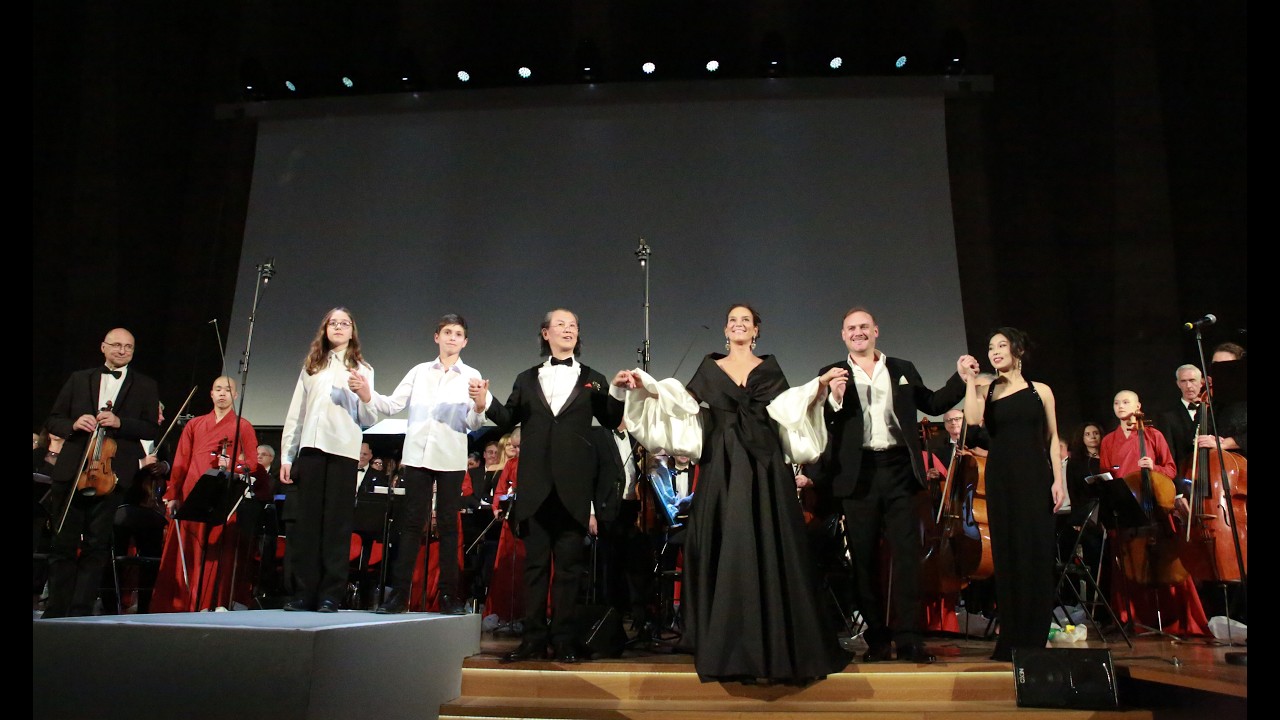
“Symphonic Prelude for Orchestra № 1 ‘New Times’” Op. 21, for large orchestra, completed in 1999; and got the prize of MORGAN STANLEY of USA support National Symphony Orchestra celebrate China 50 Anniversary of International Chinese Symphony Competition in the same year; Premiered in Zhongshan Concert Hall on August 15, 1999 by China National Symphony Orchestra and conducted by Li Xincao and got the unanimous favorable comment. And performed again in Beijing Concert Hall on September 3; and at ‘2cd Beijing International Music Festival’ on November 11. Premiered in Hong Kong by Hong Kong Sinfonietta Orchestra, conducted by Tsung Ye in May 28, 2000. And got the First Chinese Musical Golden Bell Awards on May 19, 2001, and premiered at the 56th Tokyo International Art Festival of Japan, and in USA by National Repertory Orchestra conducted by Tsung Ye in July 2003. In the Collection of 2006 “Vienna - China New Year’s Concert” Outstanding Orchestra Work hold by Chinese Musicians’ Association, China Record Company and Beijing Starlight International Co. etc. in 2005 publicly through media to society for the first time, only select in the competitions of two in over one hundred works, “New Times” is selected as first one achievement. And the composition premiered at world-famous Goldenersaal, Musikverein of Vienna at Jan. 15, 2006 by Grazer Symphony Orchestra. The composer was invited to Vienna too. In Oct. 2006, ‘New Times’ performed in Tokyo and Osaka in ‘Asia Orchestra Week 2006’ in Japan, and performed in the ‘Salzburg Festival’ in July 27, 2010 in Austria.
In drawing materials, the composer orients two pieces of the limit - the oldest and most modern. While creating like this, having looked for two main music materials, one is draw materials in the old name of tune of folk instrumental music of China called ‘Lao Ba Ban’ the beginning material. Another material is the rhythm material of taken from the sounds of BP and mobile which we can hear whenever and wherever possible in social life. It can have most on behalf of nowadays information-intensive society and have a model symbol meaning most. It develops later in the work and become loud and sonorous, clarion call type like, full of vigour, give somebody the strength of urging people to advance courageously. Professor WANG Ning attempts to use this simple and honest old tone and current most representative sound of information-intensive society, create and appear and is full of modern style orchestra works appealing to both academy and popular.
The form structure of this piece has drawn lessons from the Chinese opera style, form and material, the circulation structure characteristic of the main, whole for single theme, permeate variation and circle round principle: start, carry on, transformation and reappearance four part structure. It is a stove to melt the tactics at all times and in all lands on the overall technology of creating of the work---western tradition and modern technology to compose, and add Chinese nationality folk local opera music, modes in Chinese operatic music, Chinese percussion in opera, pass with such techniques of expression as the national instrumental music etc.. And western harmony, polyphony, micropolyphony, minimor, neoromantic style etc; The purpose of composer is to make a contemporary orchestral composition which full of style and feature of today from the very old Chinese folk music. Try hard to create out the contemporary orchestra works not only contain the romantic charm of Chinese nation's music but also full of times flavour.
第一交响前奏曲《时代》 Op.21
乐 曲 简 介
此曲作于1999年5月。1999年获中国交响乐团庆祝建国50周年世界华人交响乐作曲比赛大奖,2001年获首届“中国音乐金钟奖”大型音乐作品奖。该作品曾在大陆、香港、美国、日本、奥地利等国内外频繁上演。2001年10月1日,日本第56届东京国际艺术节开幕式中日韩三国大型音乐会演奏了代表三国各自国家的两位作曲家作品,代表中国的作品是《时代》和谭盾的《弦乐队慢板》。2005年在中国首次公开征集“维也纳-中国新春音乐会优秀乐队音乐作品”活动中,在150余部作品中《时代》以第一名成绩入选,并于2006年1月由奥地利格拉兹交响乐团在维也纳金色大厅欧洲首演。2006年10月4日、6日《时代》应邀于第五届“亚洲交响音乐周”(Asia Orchestra Week 2006)在日本东京歌剧城、大阪国家音乐厅上演。《时代》曾在奥地利萨尔茨堡国际音乐节、韩国国际音乐节及美国、香港及内地多个音乐节频繁上演。
在该作品中,作曲家寻找了最古老的与最现代的两种创作素材,一个是取材于中国古老的民间器乐曲牌,人称“天下同”的《老八板》其中开始部分的音乐素材;另一个是取自于当时社会生活中随时随地都能听到的寻呼机的声音,它也是最能代表当今信息时代、并最具典型性的符号意义的声音。在后面它发展成高亢的、号角式的音响,充满朝气,给人以催人奋进的力量。作曲家创作时有意摒弃当时大家热衷的十二音、无调性等现代技法,试图用此纯朴、简单的古老音调和当今信息社会最具代表性的音响,创作出当代的、力图雅俗共赏的时代性的作品。
此曲曲体结构类似中国戏曲曲牌体某些结构特征,整体为单一主题的、渗透着变奏与回旋原则的、启、承、转、合之四部性结构。在乐曲总体创作技术上融古今中外之手法为一炉— 中国民族民间的戏曲音乐、板式、锣鼓经与民族器乐等表现手法与西方的近现代作曲技术相融合,力图创作出既蕴涵中华民族音乐之神韵,又充满时代气息的当代乐队音乐作品。
• WANG Ning: Symphony No.3 'Call For The Fut...
• Видео
• WANG Ning: Symphony No.5 'Ode to Humanity'...
• Wang Ning: Symphonic Prelude For Orchestra...
• WANG Ning:Dissimilation-for ensemble Op.23...
• WANG Ning: String Quartet No.1 ‘Styles Dia...
• WANG Ning: The Epic Opera 'THE GREAT KING ...
• WangNing: Duet for Erhu and Orchestra Op.9...
• 王宁:第八交响曲《陈嘉庚》Wang Ning:Symphony No.8 'Chen...
• WANG Ning: FESTIVITY for Chinese orchestra...
• WANG NING 王宁:《妫川古韵》为民族管弦乐而作 Op.27, The Anc...
• 王宁:大型史诗歌剧《孔子》(选曲) WANG NING: Epic Opera ‘C...








Информация по комментариям в разработке