Your Relationship isn't “broken.”
You’re stuck in a pattern, and the pattern has a nervous system behind it.
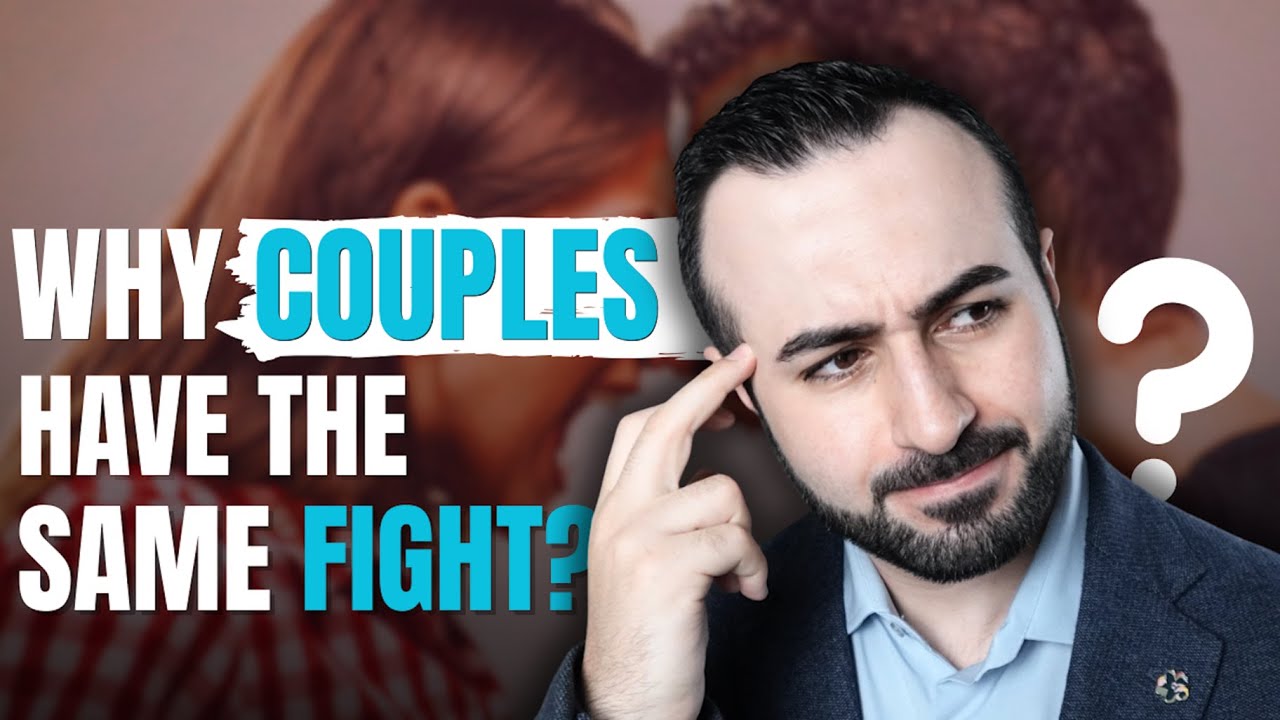
If you keep having the same fight, here’s what’s usually happening:
• The topic (dishes, money, tone) is the petal
• The unmet need (support, acknowledgment, intimacy) is the stem
• The real pattern (resentment, upbringing, state of your union) is what keeps regrowing the same argument
In this video, I answer:
• 0:00 Intro
• 0:42 Why do couples keep repeating the same argument, even after “resolving” it?
• 1:03 How your conflicts are like flowers, you're only looking at the petals.
• 1:42 What’s the demand-withdraw cycle, and why does it feel impossible to escape?
• 2:18 What is “flooding,” and why does your brain stop doing logic & empathy mid-fight?
• 3:00 How do you use the Gottmans' Gentle Startup (I feel / about / I need) to change the direction fast?
• 4:19 When should you take a break, and how long is long enough to cool down?
• 5:11 Conflict isn't bad. What is the biggest cause of frustration for you?
TRY THIS!
I feel ___ about ___ and I need ____.
Example: “I feel overwhelmed about how chores are landing, and I need us to feel like a team.”
Resource: Emotion Wheel
https://therapybyyou.com/resources/
Let me know below if the fight is the “petal,” what’s the “root” for you?
Disclaimer (Therapy By You / Your Brain):
I’m Mike Shihadeh, a Licensed Professional Counselor in Michigan. Your Brain is educational content, not therapy or medical advice, and watching doesn’t create a therapist–client relationship. If you’re in immediate danger or considering self-harm, call your local emergency number (U.S.: call/text 988). If you’re outside the U.S., use your country’s emergency/crisis resources.
Citations:
• Battaglia, S., & Thayer, J. F. (2022). Functional interplay between central and autonomic nervous systems in human fear conditioning. Trends in Neurosciences, 45(7), 504–506. doi.org/10.1016/j.tins.2022.04.003
• Gottman, J. M., Driver, J., & Tabares, A. (2015). Repair during marital conflict in newlyweds: How couples move from attack–defend to collaboration. Journal of Family Psychotherapy, 26(2), 85–108. doi.org/10.1080/08975353.2015.1038962
• Gottman, J. M., & Silver, N. (2015). The seven principles for making marriage work: A practical guide from the country’s foremost relationship expert. Harmony.
• Hannibal, K. E., & Bishop, M. D. (2014). Chronic stress, cortisol dysfunction, and pain: A psychoneuroendocrine rationale for stress management in pain rehabilitation. Physical Therapy, 94(12), 1816–1825. doi.org/10.2522/ptj.20130597
• Papp, L. M., Kouros, C. D., & Cummings, E. M. (2009). Demand-withdraw patterns in marital conflict in the home. Personal Relationships, 16(2), 285–300. doi.org/10.1111/j.1475-6811.2009.01223.x




![9 Science-based Life Hacks to Improve your English Learning Potential in 2026 PART 2 🧠 [971]](https://i.ytimg.com/vi/7YiMRnRue5c/maxresdefault.jpg)
![Роберт Сапольски — Депрессия [Vert Dider]](https://i.ytimg.com/vi/_UtA0dwGoUQ/maxresdefault.jpg)



Информация по комментариям в разработке