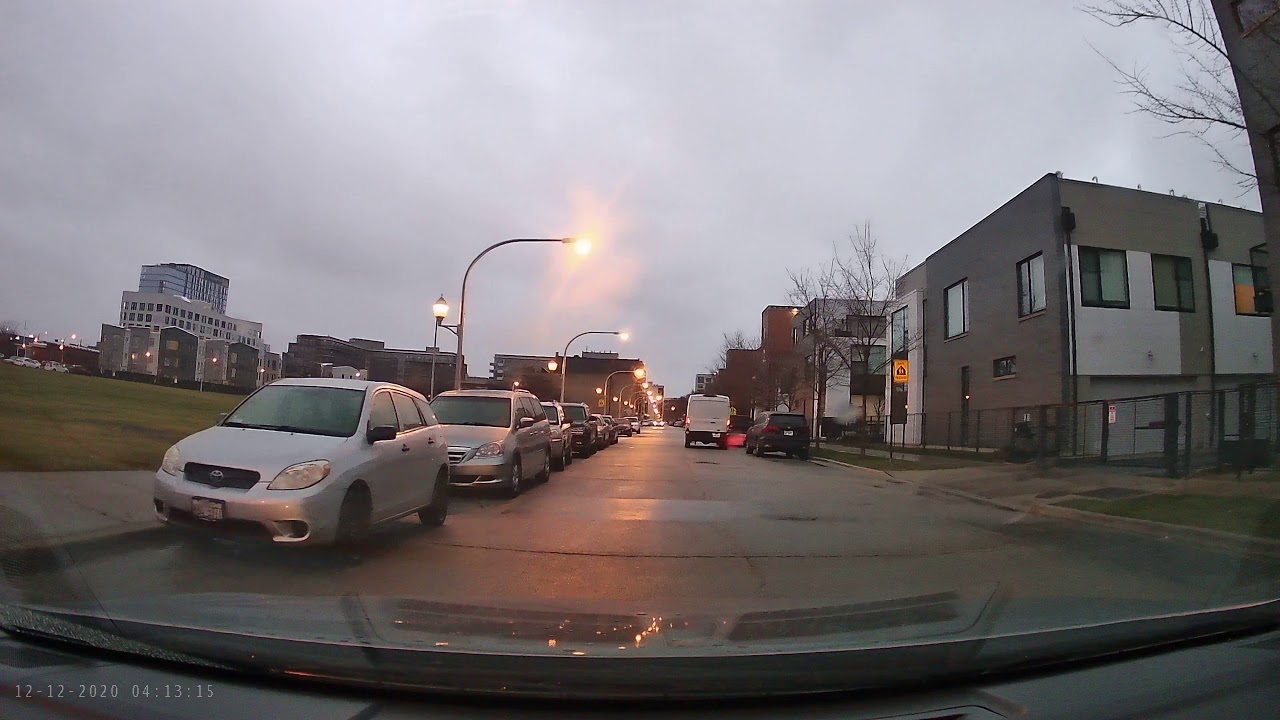
CABRINI GREEN ROW HOUSES AT NIGHT
Cabrini–Green Homes, which encompassed the Frances Cabrini Rowhouses, Frances Cabrini Extensions, and William Green Homes, was a Chicago Housing Authority (CHA) public housing project located on the Near North Side of Chicago, Illinois. The Francis Cabrini Rowhouses and Extensions were located south of Division Street bordered by Larrabee Street to the west, Orleans Street to the east, and Chicago Avenue to the south, while the William Green Homes sat immediately to the northwest.[2]
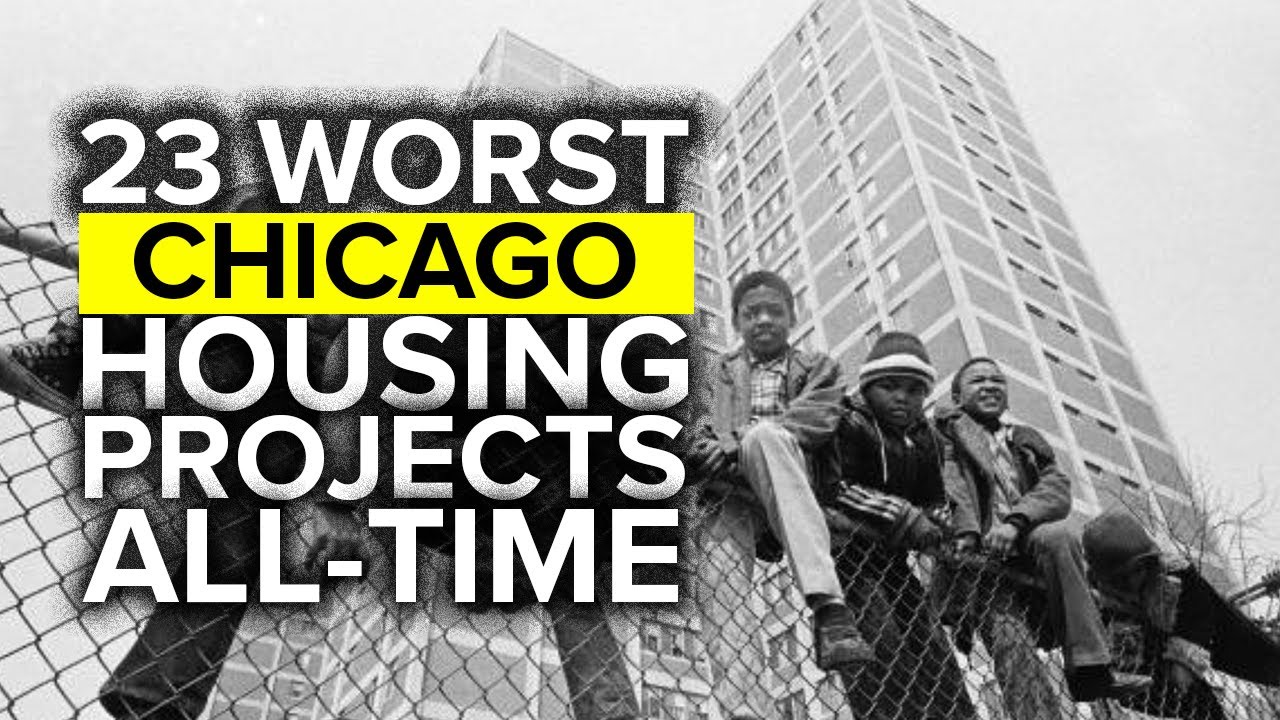
At its peak, Cabrini-Green was home to 15,000 people,[3] mostly living in mid- and high-rise apartment buildings, totaling 3,607 units. Over the years, crime and neglect created hostile living conditions for many residents, and "Cabrini-Green" became a metonym for the problems associated with public housing in the United States. Beginning in 1995, CHA began tearing down the mostly dilapidated, mid- and high-rise buildings, with the last high-rise being demolished in March 2011.[4] Today, only the original, two-story rowhouses remain.
At the same time, this area has become the site of major redevelopment plans due to its close proximity to downtown, resulting in a combination of upscale high-rises and townhouses with some units being CHA owned, for the stated goal of creating a mixed-income neighborhood. This has created some controversy between developers and longtime residents due to the area becoming rapidly more expensive. Slated redevelopment plans had moved forward following the September 2015 settlement of a civil lawsuit.[3]
The construction reflected the "urban renewal" approach to United States city planning in the mid-20th century. The extension buildings were known as the "red" for their red brick exteriors, while the Green Homes, with reinforced concrete exteriors, were known as the "whites".[5] Many of the high-rise buildings originally had exterior porches (called "open galleries"). According to the CHA, the early residents of the Cabrini row houses were predominantly of Italian ancestry.[6] By 1962, however, a majority of residents in the completed complex were black.
Timeline
A Cabrini–Green mid-rise building, 2004.
1850: Shanties were first built on low-lying land along Chicago River; the population was predominantly Swedish, then Irish. The area acquires the "Little Hell" nickname due to a nearby gas refinery, which produced shooting pillars of flame and various noxious fumes. By the 20th century, it was known as "Little Sicily" due to large numbers of Sicilian immigrants.[7]
1929: Harvey Zorbaugh writes "The Gold Coast and the Slum: A Sociological Study of Chicago's Near North Side", contrasting the widely varying social mores of the wealthy Gold Coast, the poor Little Sicily, and the transitional area in between. Marshall Field Garden Apartments, first large-scale (although funded through private charity) low-income housing development in area, completed.
1942: Frances Cabrini Homes (two-story rowhouses), with 586 units in 54 buildings, completed. Initial regulations stipulate 75% white and 25% black residents. Holsman, Burmeister, et al., architects. (Named for Saint Frances Cabrini, an Italian-American nun who served the poor and was the first American to be canonized.)
1957: Cabrini Homes Extension (red brick mid- and high-rises), with 1,925 units in 15 buildings, is completed. A. Epstein & Sons, architects.
1962: William Green Homes (1,096 units, north of Division Street) is completed. Pace Associates, architects. (Named for William Green, longtime president of the American Federation of Labor.)
1966: Gautreaux et al. vs. Chicago Housing Authority, a lawsuit alleging that Chicago's public housing program was conceived and executed in a racially discriminatory manner that perpetuated racial segregation within neighborhoods, is filed. CHA was found liable in 1969, and a consent decree with HUD was entered in 1981.[8][9]
edit 3/1/2021 215 views CABRINI GREEN AT NIGHT , Tik Tok Zpierre509






![[4K] Experience CHICAGO RIVERWALK at Night - Evening Walking Tour Vlog & Travel Guide](https://i.ytimg.com/vi/BszNtb6X5NQ/maxresdefault.jpg)



Информация по комментариям в разработке