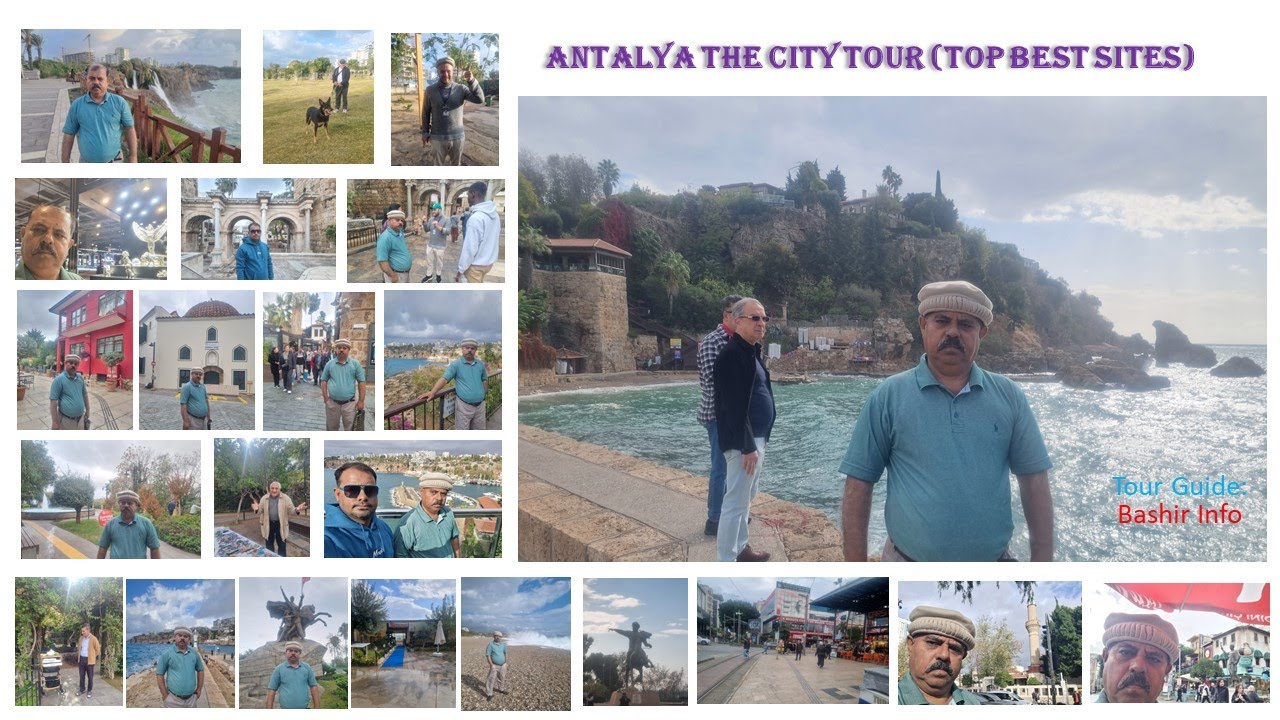
https://www.facebook.coHistory of old town Antalya
Antalya
Old Town known as:
Kaleiçi
(meaning "inside the castle"), is the historic heart of the modern city and has a rich history spanning over two millennia, having hosted a succession of civilizations including Hellenistic, Roman, Byzantine, Seljuk, and Ottoman.
Key Historical Periods and Landmarks
• Hellenistic Period: The city was founded around 150 BC by Attalus II, King of Pergamon, who named it Attaleia after himself. The settlement grew around its natural harbor, which was its primary economic hub for centuries.
• Roman Era: In 133 BC, the Romans took control, and the city prospered. Emperor Hadrian visited in AD 130, a visit commemorated by the construction of the magnificent, three-arched Hadrian's Gate (Üçkapılar), which still stands as a main entrance to the Old Town. The Hıdırlık Tower, a 2nd-century Roman tower, likely used as a watchtower or lighthouse, also overlooks the harbor.
• Byzantine Era: After the Roman Empire's decline, Antalya became an important Byzantine city. The city's strategic walls were maintained and strengthened during this period.
• Seljuk Era: The Seljuk Turks conquered the city in the early 13th century. This period left a significant architectural legacy, most notably the Yivli Minaret (Fluted Minaret), a symbol of Antalya, built by Sultan Alaeddin Keykubat I. The Yivli Minaret Mosque complex includes a dervish lodge and madrasah, showcasing Seljuk architectural style.
• Ottoman Era: The Ottomans gained control of Kaleiçi in the late 14th century and ruled until the early 20th century. This era is evident in the charming, narrow, cobblestone streets and numerous well-preserved traditional Ottoman-era houses with their distinctive red-tiled roofs and bay windows. The Tekeli Mehmet Paşa Mosque, a 17th-century institution, also dates from this time.
• 20th Century and Modern Day: After a brief Italian occupation following World War I, Antalya became part of the new Republic of Turkey. Until the 1950s, the entire city was essentially confined within the Old Town walls. Extensive restoration projects in the late 20th century transformed the area into a protected, vibrant cultural and tourism hub, blending its ancient history with modern life.
Today, Kaleiçi is a major tourist attraction where visitors can wander through a living museum of cultures, enjoying boutique hotels, cafes, and shops housed within centuries-old buildings.
m/bashir66.503/







Информация по комментариям в разработке