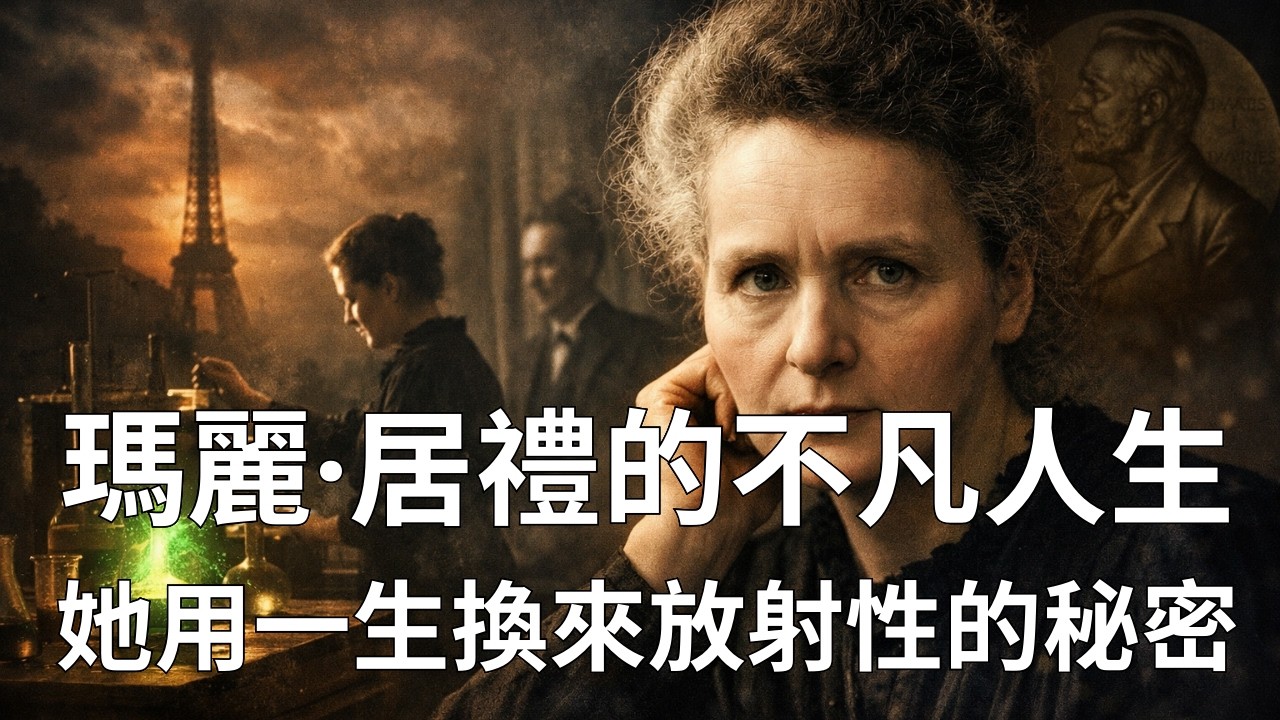
一八六七年,波蘭一個窮苦家庭誕生了一個小女孩。她沒有錢,沒有機會,甚至沒有在自己的國家接受高等教育的權利。但她最終拿下了兩座諾貝爾獎——物理獎與化學獎——成為人類史上唯一一個在兩個不同科學領域獲得最高榮譽的人。
她是瑪麗·居禮。這集我們要講的,是一個你以為你知道、但其實只知道一半的故事。
她和姊姊簽下了充滿情義的姊妹協議,輪流資助對方去巴黎求學。她在破舊的棚屋裡和丈夫皮埃爾一起處理幾噸重的礦渣,發現了釙和鐳兩個新元素,為人類打開了放射性研究的大門。她在最輝煌的時刻失去了摯愛的丈夫,在全社會的謾罵中昂首走上諾貝爾頒獎台。她設計了移動式X光車開到一戰的砲火前線,拯救了無數傷兵的生命。而最後,她用自己的生命,換來了人類對輻射危害的第一手認識。
這不只是一個科學家的故事。這是一個人如何在時代的重重枷鎖中,靠著信念、勇氣和永不停歇的好奇心,為自己和所有後來的人開出一條路的故事。
In 1867, a girl was born into a poor family in occupied Poland. She had no money, no privilege, and no right to receive a university education in her own country. Yet she went on to win two Nobel Prizes, one in physics and one in chemistry, making her the only person in history to be honored at the highest level in two different scientific fields.
She was Marie Curie. And in this episode we tell the story you think you already know, but actually only know half of.
We follow her journey from a simple sisterly pact to share the cost of studying in Paris, to years of processing tons of pitchblende ore in a leaking shed to discover two entirely new elements. We explore how she lost her beloved husband at the height of their success, how she walked onto the Nobel stage with her head held high while all of France condemned her, and how she drove mobile X-ray units to the front lines of the First World War to save wounded soldiers.
And we look honestly at the price she paid. The radioactivity she spent her life studying was also slowly destroying her body. She died at sixty-six from a disease caused by radiation exposure.
Her story is not simply the story of a scientist. It is the story of how one person, facing every barrier that an era could construct, carved a path forward through sheer belief, courage, and an unquenchable curiosity about how the world works.
瑪麗居禮, Marie Curie, 諾貝爾獎, 放射性, 居禮夫人, 科學家, 女性科學家, 歷史人物, 向大師致敬, 沉思者J, Thinker J, 傳記, 科學史, 釙, 鐳, 物理學, 化學, 女性力量, 波蘭, 一戰
Информация по комментариям в разработке