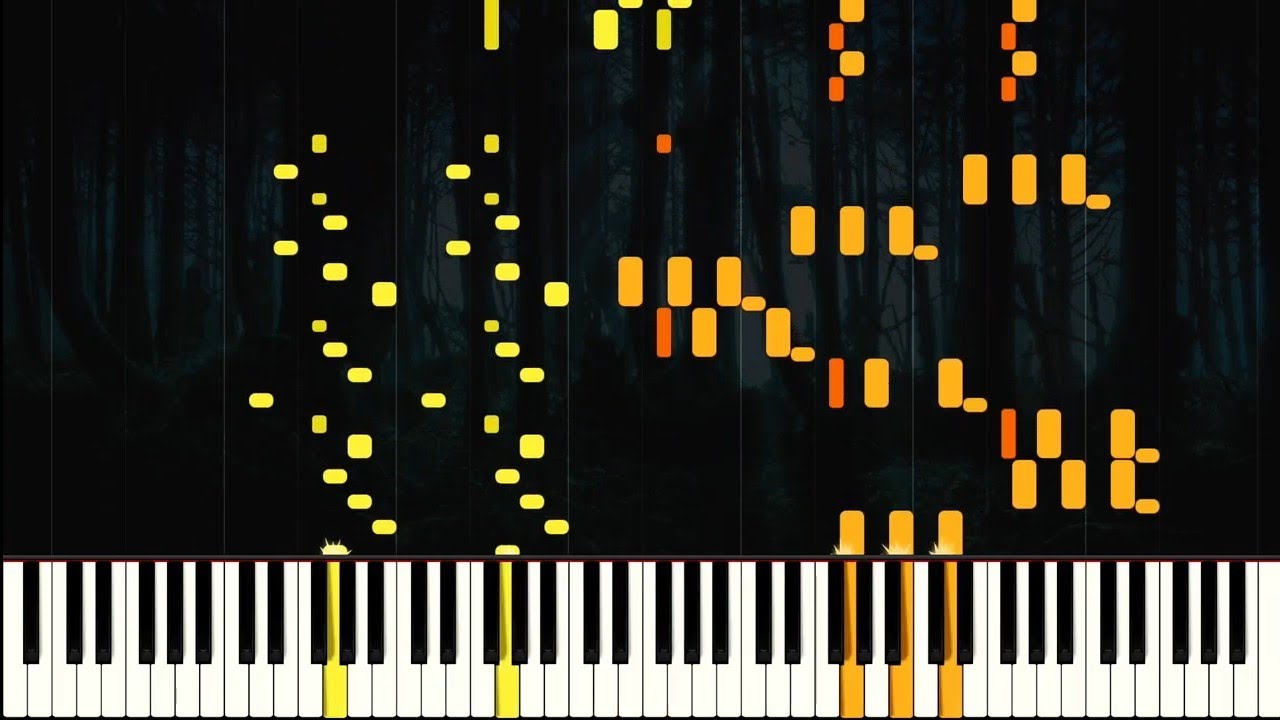
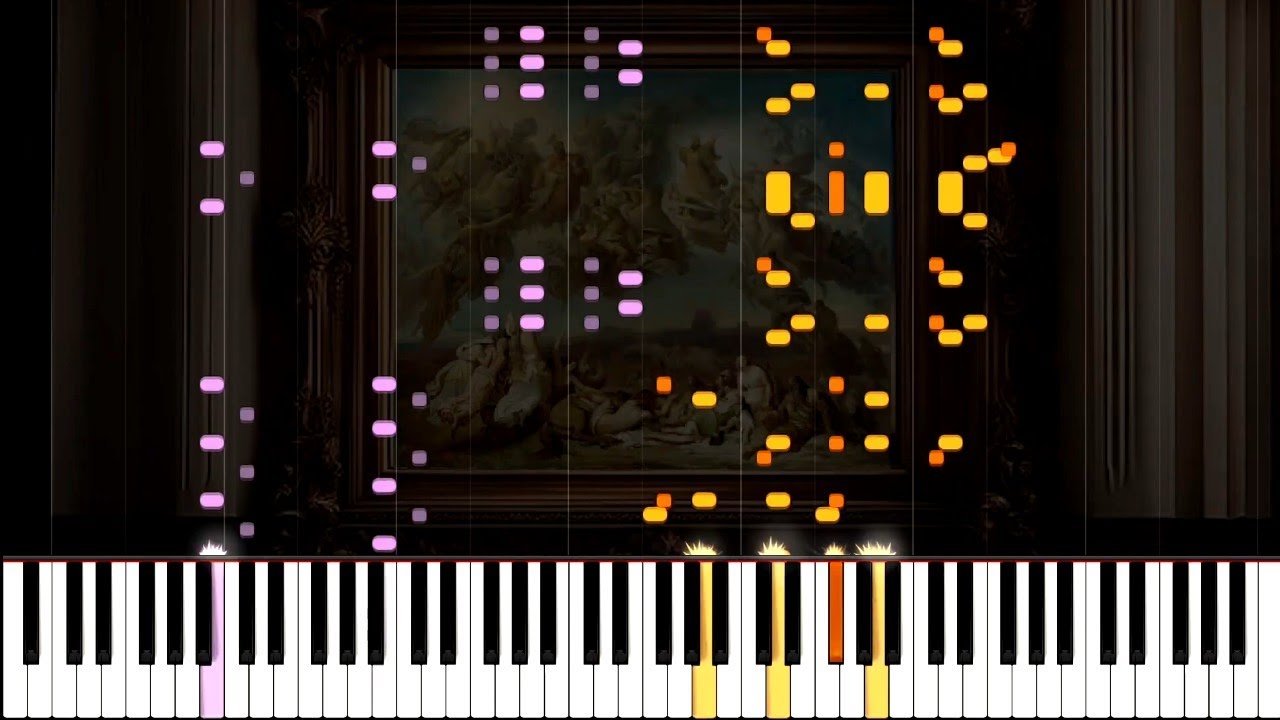
Franz Liszt/Giacomo Meyerbeer: Valse Infernale from "Robert le Diable" (first version, with ossia and optional cuts), S.413.
[...] Liszt, an avid opera fan, transcribed [the third act's waltz] in 1841 as Réminiscences de Robert le diable—Valse infernale, which he performed for the first time at a recital in the Salle Erard on March 27, 1841, creating a furor—it sold out the same day it was put on sale by his publisher, Maurice Schlesinger. Schlesinger, at that time, was tossing journalistic assignments and musical hackwork to the obscure Richard Wagner, then in perilous financial straits in Paris. At an all-Beethoven fundraising concert on April 25, with Berlioz in command of the orchestra and Liszt the featured soloist, a clamorous audience refused to allow the program to proceed until Liszt at last consented to perform the Valse infernale. Reviewing the event for the Dresden Abendzeitung, Wagner snarled "Some day Liszt in heaven will be summoned to play his Fantasy on The Devil before the assembled company of angels." (notes by allmusic.com)
In choosing themes on which to base his fantasia, Liszt headed for the demonic elements in the Opera, those associated with the character of Bertram, who, despite the title, is the real devil of the piece. Indeed, the "Schauer-romantik" thrill of this mild diablerie goes some way to explaining the exalted place of Robert le Diable in the affections of 19th Century audiences. Liszt’s favourite part of the opera was the Act III scene of the enchanted branch, which he compared, rather floridly, to the type of Dantesque fantasy found in George Sand’s novel Spiridion. It is from this section that the fantasia’s second theme is taken. The first theme is Bertram’s Valse Infernale, and the last that of a chorus in the Act II finale "Sonnez, clairons", which may at first appear to have little to do with any "Satanic" theme. However, after the melody is first heard in the opera it is recalled throughout to remind the listener of Bertram’s fiendish machinations, accompanying for example his Act III recitative "on trompa ta valeur". Using these themes, Liszt paints a powerful picture of the most striking element in the opera, rejecting melodies incidental to his main theme. This was something he had successfully attempted in Réminiscences des Huguenots, and Ramann was the first to point out the departure from the common run of operatic fantasias: "He seized the idea so to choose the melodies that, through their contrast and yet through a certain connection with a dramatic picture, they might be developed into a scene in which the general character of the opera [...] should, as it were, float in the background of the fantasia."
Réminiscences de Robert le Diable is a better advert for this technique than the earlier Huguenot piece, if only for its economy of means and almost Beethovenian energy. [...] The piece is unified by a consistent use of the duh-u-daah-daah (0:48) rhythm which characterises the Valse-Infernale: both the "de ma gloire éclipsée" theme and the "séduction par le jeu" melody are underpinned by this on their first appearance, forging a link between passages taken from different parts of the opera. So skilfully is the surging flow of the fantasia maintained by combination and dovetailing together of themes that it is difficult to believe that this was not their original sequence. Thematic combination not only helps to integrate the piece, but also moulds breathtaking climaxes that were held up as a source of wonder by Liszt’s contemporaries: "In the fantasia on themes from Robert le Diable he solves a nearly insoluble problem: he fits together the theme sung by Bertram "de ma gloire éclipsée" with that of the dance of the Abbess of the hellish nuns "Jadis filles du ciel"; he then again intertwines the Second Act theme "Sonnez, duirons", and the workmanship is so ingenious, so adroit that it seems easy, and that one would swear that these three themes were made to sound together in this intimate, fraternal union." (Paul Smith, in the Revue et Gazette Musicale, 1841)
Another element which makes for unity is the surprisingly consistent adherence to B as the main key of the piece, forsaken briefly only in the central section. Undoubtedly this is a consequence of the rondo-like construction and the powerful pull of B-minor as the "demonic" key of the Valse Infernale. Monotony is avoided by the sheer dynamism of the keyboard writing and the fascination of the thematic working. [...]
Liszt crams so much invention together with lightning speed that one scarcely notices that the music is constantly anchored to a single key. The imagination is not confined to the juxtaposition of melodies, but extends to improvements in their initial presentation. (notes by Kenneth Hamilton)
Final version (with the Cavatine): • Réminiscences de Robert le Diable, S.412a ...
Valse Infernale, version for piano 4 hands (S.630): • Reminiscences de Robert le diable (for 4 h...
Our Discord Server: / discord







Информация по комментариям в разработке