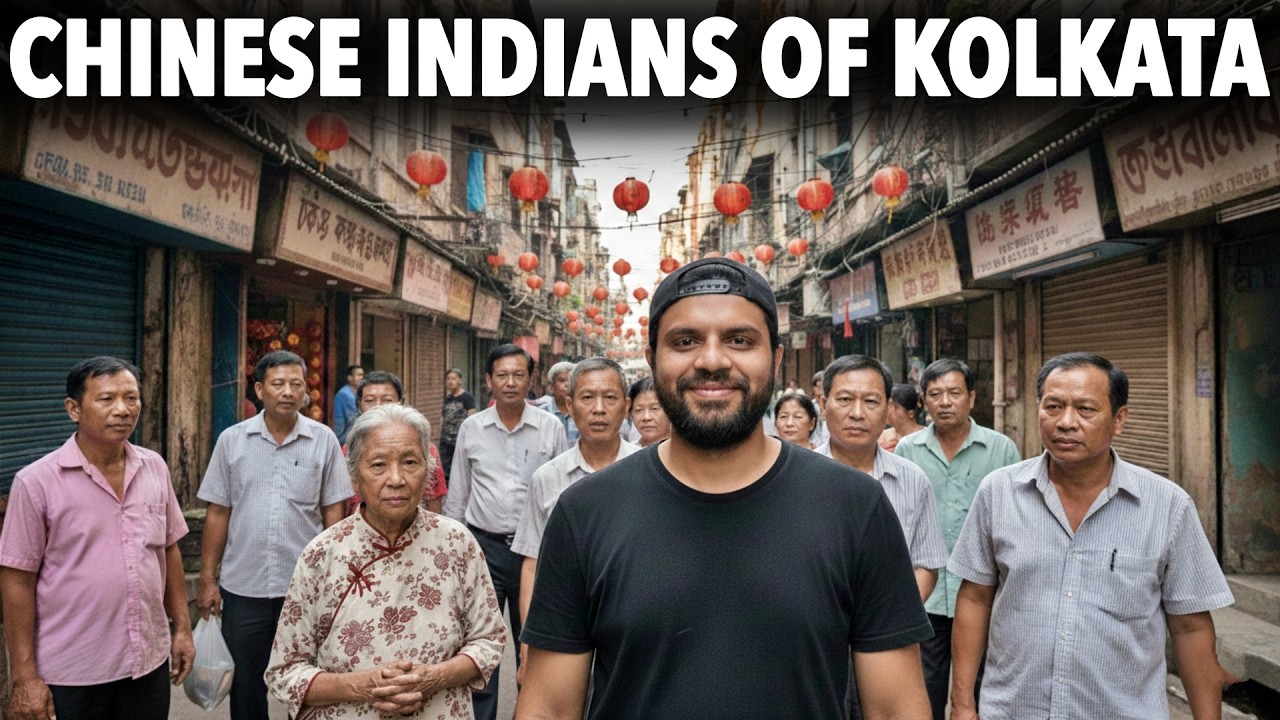
The place depicted in the image is Tiretta Bazaar, famously known as Old Chinatown. Located in the heart of Central Kolkata, near the bustling Bowbazaar area, it is the only place in India where a distinct ethnic Chinese community has lived for over two centuries.
A Legacy of Migration
The history of this neighborhood dates back to the late 18th century, around 1780, when a Chinese trader named Yang Tai Chow (known locally as Atchew) landed on the banks of the Hooghly River. He was granted land by the British Governor-General, Warren Hastings, to set up a sugar plantation and mill. After Atchew passed away, the Chinese workers from his mill migrated to the city, settling in this very spot. Over the decades, waves of migrants from the Guangdong and Fujian provinces followed, bringing with them their traditions, language, and craftsmanship in carpentry, tanning, and shoemaking.
The Architecture and Atmosphere
Walking through these narrow, gritty lanes feels like stepping into a different era. The "raw reality" you see in the frame—the weathered brick buildings, the tangled overhead electrical wires, and the faded shop signs—is the everyday backdrop of this community. Scattered among the residential houses are several Huiguans (Chinese social clubs and temples), such as the Sea Ip Church and the Choonghee Dong Thien Haue Church. These temples are tucked away behind unassuming doors, holding onto exquisite wood carvings, antique altars, and the scent of incense that has burned for generations.
The Iconic Morning Market
The street in the photo is most famous for its early morning breakfast market, which is a legendary ritual in Kolkata. Every day at dawn, the neighborhood transforms into an open-air kitchen. Elderly residents and local vendors set up small tables to sell authentic, homemade delicacies that you won't find in a standard restaurant:
Steamed and Fried Momos: Often stuffed with pork or chicken.
Fish Ball Soup: Light, clear broth with handmade bouncy fish balls.
Pau (Buns): Soft, steamed buns filled with sweet or savory fillings.
Chinese Sausages and Rice Crackers: Prepared using traditional family recipes passed down through the ages.
A Community in Transition
While the image shows a bustling scene, the reality is that the Chinese-Indian population in Tiretta Bazaar is shrinking. Following the Sino-Indian War of 1962, many families faced hardships and eventually migrated to countries like Canada, Australia, and the United States. Today, only a few thousand residents remain. Those who stayed are the guardians of a unique hybrid culture—people who speak fluent Bengali, celebrate Durga Puja, yet still maintain their ancestral Chinese traditions and the Cantonese or Hakka dialects.
This place isn't just a "tourist spot"; it is a living museum of resilience and the birthplace of the "Indo-Chinese" flavors that have now conquered the entire Indian palate.












Информация по комментариям в разработке